The waves of losing a sibling to suicide, nearly 26 years later
Content note: This post discusses sibling loss, suicide, and traumatic grief.
My brother John died by suicide on February 21, 2000, at 2:30 in the morning. Nearly 26 years have passed, but I still remember the date and time as if they were carved into me.
Most days, I live the life I have built. I am a wife, a mother, a student, a thanatologist, and an end-of-life doula. I study death, dying, grief, and bereavement. I understand continuing bonds, traumatic grief, meaning making, and the way grief changes over time. I have spent years learning the language and frameworks that help us understand death and loss.
But John is not a framework. He is my brother.
And sometimes, he still comes crashing into my life.
It can happen through a song, a memory, or a photograph. Sometimes it feels as though his spirit washes over me like a wave, and for a moment I can feel the anguish he carried. It is not all of me. It does not control my life. The intensity is not what it was many years ago. Still, every so often, the distance between February 2000 and the present disappears.
I let the wave come.
There is a photograph of John and me at a friend’s wedding during the summer before he died. I love that picture. He is wearing a blue shirt and smiling a soft, beautiful smile. We are standing close together with our hands clasped. He is alive. He is my brother. That photograph should be able to remain exactly what it is: a loving moment between two siblings at a wedding.
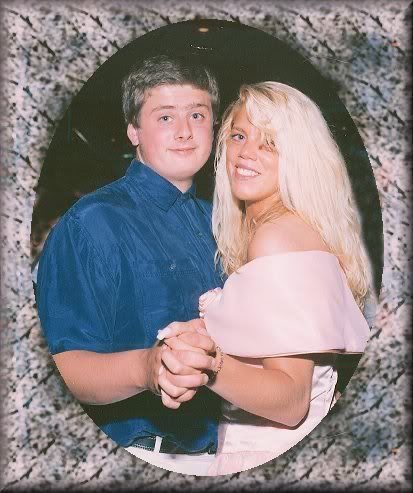
But sometimes, when I look at his smile, another image takes over.
I had to identify John’s body at the morgue. I saw the violence that his death had done to his beautiful face. Later, my mother chose to have an open-casket funeral and asked the funeral home to reconstruct his face. I still do not understand why. For me, it was a second trauma layered on top of the first. Instead of being able to hold on to the face I had known throughout our childhood, I was confronted again with the manner of his death.
The photograph and those traumatic images now exist in the same mind. I cannot simply choose one and erase the other. If grief worked that way, I would have done it years ago.
People often reach for phrases when someone dies by suicide. They call it “selfish,” or they say it was “a permanent solution to a temporary problem.” I have never found those words helpful. They reduce unbearable human suffering to a slogan. John was not selfish. He was in anguish. Whatever was happening inside him had become more than he believed he could survive.
My mother said that John went to hell. I never believed that. I do not believe that a suffering soul is condemned because pain overwhelmed his ability to keep living. I believe that when it is a person’s time to die, somehow the universe lets them go, regardless of how the death happens. That belief does not mean I would ever stop trying to protect someone who is still alive. We cannot know when another person’s time has come, so we reach for them, help them, and do everything we can to keep them here. But after John died, I refused to make shame or punishment part of his story.
For many years, I had my sister Heidi to talk to about him. We talked about John constantly; through ordinary conversations, holidays, and vacations. We talked about how much we missed him. We searched our memories for things we thought we might have missed. Heidi understood without explanation because she was not only grieving John; she was his sister too. She carried the same childhood history and knew the person he had been before that final moment.
Then Heidi died in 2020.
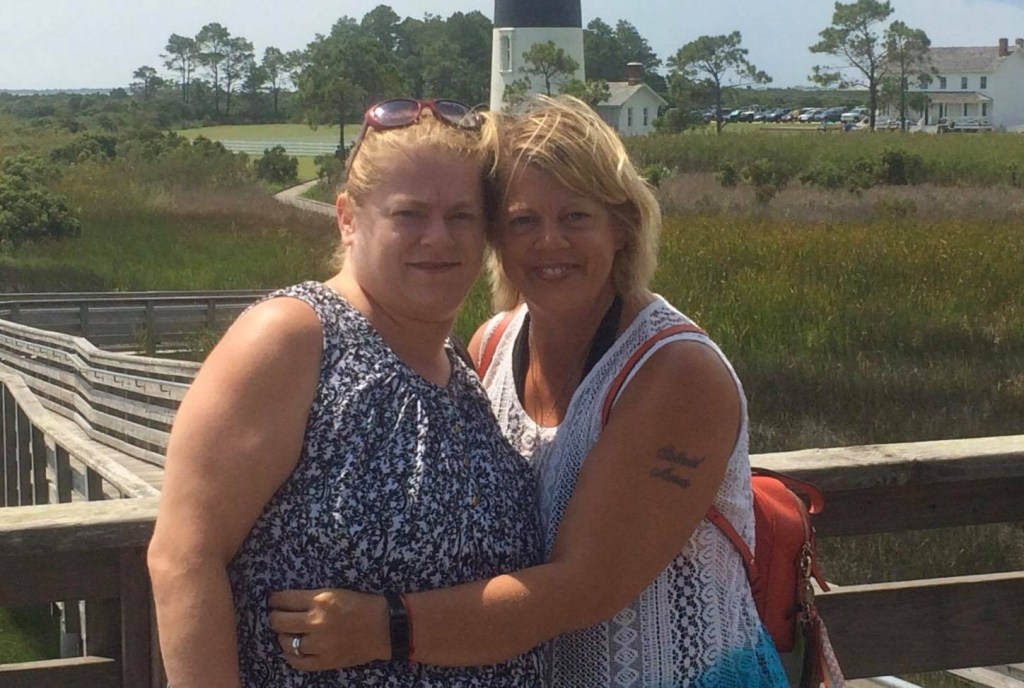
When she died, I also lost the only other person who could miss John with me in exactly that way. There is a loneliness in being the sibling left behind; the one still holding the memories of both of them. I miss my brother. I miss my sister. And I miss having my sister here to talk with about how much we miss our brother.
This is part of why I do the work I do. Their deaths did not happen so that I could discover a purpose, and I would never try to make something so painful sound beautiful or necessary. But the love I still have for John and Heidi needs somewhere to travel. I want my hand to touch someone else and bring them some measure of comfort. That might mean sitting beside a person in hospice, supporting someone who is grieving, being present with someone choosing medical aid-in-dying, or giving a veteran room to speak about grief that others may not understand.
I do not care whether every act of compassion earns money. Some moments are too sacred to measure that way. I simply want another human being to feel less alone.
Still, I do not have to turn every wave of grief into service. I do not have to make my pain useful every time it rises. Sometimes I am not “Anna the Thanatologist.” Sometimes I am simply AnneMarie, John and Heidi’s sister, missing them.
Nearly 26 years later, I have not failed to heal because John still lingers. Healing does not require forgetting his face, silencing his name, or reaching a point where his death can no longer hurt me. I have learned how to live a full life while continuing to love someone who is no longer physically here. Most of the time, I carry that love quietly. Sometimes it comes in like a king tide.
When John comes crashing in from the universe, I let him crash. I let myself feel it. The wave rises, and eventually it recedes. I remain here.
But so does my love for him.
John was more than the way he died. He was my brother with a beautiful face and a soft smile, standing beside me at a summer wedding. The violence of his final moment does not get to define his whole life, his soul, or our relationship.
I miss him.
I miss Heidi.
And I am allowed to be a thanatologist and grieve.
If you or someone you know is struggling with thoughts of suicide in the United States, call or text 988 to reach the Suicide & Crisis Lifeline. If there is immediate danger, call 911 or go to the nearest emergency department.


Leave a Reply