Anna Spreckels, MA | Thanatologist | End-of-Life Doula | MSW Student

  • MSW student (Liberty University)
  • MA in Thanatology (CUNY Brooklyn College)
  • Thanatology & community health professional
  • Volunteer bereavement support caller (Accent Care Hospice)
  • Trained end-of-life doula
  • Working toward grief & bereavement therapist licensure
  • Guided by compassion, dignity, and the belief that no one—human or animal—should face death alone
National End-of-Life Doula Alliance (NEDA) Member Badge
  • Animal-assisted therapy (AAT) has become one of the most meaningful and clinically valuable tools in mental health, hospice care, trauma recovery, and bereavement support. Decades of research show measurable psychological and physical benefits, yet most U.S. insurance plans still do not cover the service directly, even though the evidence is strong (Fine, 2019).

    As someone studying and engaged in grief and end-of-life work, and as a handler training my Saint Bernard, Esther, for therapy-dog work, I see every day how powerful the human–animal bond can be. A single moment of connection can calm panic, reduce suffering, and open space for meaningful conversation.

    So why isn’t this covered? And what needs to change?

    What Insurance Covers — and What It Doesn’t
    Medicare

    Medicare currently does not cover AAT for mental health, hospice, or rehabilitation.
    The clinician may be reimbursed for psychotherapy or occupational therapy, but the animal’s role is not recognized as part of the billable service.

    Medicaid

    Some state Medicaid plans allow animal-assisted therapy when:

    • it is delivered by a licensed clinician
    • it is goal-oriented
    • it is part of a documented treatment plan

    However, this varies significantly by state and is not standard practice.

    Private Insurance

    Some treatment programs incorporate AAT and accept insurance, but the session is billed under standard CPT codes (e.g., psychotherapy, OT, PT) — not because the animal is recognized in policy. Many private plans explicitly exclude “pet therapy.”

    This mismatch between evidence-based benefit and insurance policy is the heart of the problem.

    🐾 The Evidence Is Clear: AAT Works

    Peer-reviewed research has repeatedly demonstrated the benefits of animal-assisted therapy:

    1. Trauma, Anxiety & Depression

    Interacting with therapy animals reduces cortisol, anxiety, and emotional distress (Pendry et al., 2019; Pendry et al., 2020).
    A systematic review found that AAT significantly improves PTSD symptoms and emotional regulation (O’Haire, 2017).

    2. Hospice & Palliative Care

    In end-of-life care, AAT decreases pain perception and improves emotional well-being (Diniz Pinto et al., 2021).

    3. Grief & Bereavement

    Animals help create emotional safety, which encourages deeper expression of grief — a key part of Worden’s mourning tasks. AAT supports children in processing difficult emotions and trauma (Dietz et al., 2012).

    4. Child Emotional Regulation

    Human–animal interaction boosts oxytocin and reduces stress hormones, grounding children during periods of emotional upheaval (Beetz et al., 2012).

    5. Physical Rehabilitation

    A meta-analysis found that AAT improves mobility, motivation, endurance, and social functioning (Nimer & Lundahl, 2007).
    In pain management, therapy animals reduce both reported pain and physiological stress (Marcus, 2012).

    The research base is robust, consistent, and multidisciplinary.

    💔 Why This Matters for Grief and End-of-Life Care

    People who are grieving — or approaching the end of life — often describe intense emotional pain, fear, and loneliness. A therapy animal provides:

    • grounding during traumatic grief flashbacks
    • comfort during anticipatory grief
    • quiet support for families in hospice
    • gentle space for children to open up
    • reduced anxiety during medical or counseling appointments

    These aren’t “extras.”
    They are clinically meaningful interventions supported by evidence (Cherniack & Cherniack, 2014).

    Over 20 years of research, no major study has found harm when therapy animals are appropriately trained, screened, and handled.

    🏛 Why Insurance Should Cover Animal-Assisted Therapy
    1. AAT is evidence-based

    The literature supporting AAT is stronger than many therapies already reimbursed (Fine, 2019).

    2. It reduces healthcare costs

    Lower anxiety, decreased need for sedatives, improved therapy participation, and better rehabilitation outcomes all translate to cost savings (Marcus, 2012).

    3. It improves access to care

    Patients and families are more willing to attend therapy when a trained animal participates (Geist, 2011).

    4. AAT is regulated and safe

    Organizations like Pet Partners and IAHAIO have rigorous standards for infection control, behavior testing, and handler education (Fine, 2019).

    5. It increases equity in mental health and hospice care

    Families shouldn’t have to pay out of pocket for an intervention shown to reduce suffering across multiple populations.

    🔎 What Needs to Change

    To make AAT reimbursable, health systems must:

    • develop CPT codes for animal-assisted interventions
    • include AAT in Medicare/Medicaid mental health and hospice benefits
    • educate insurers about evidence-based outcomes
    • require licensure + certified animal-handler teams
    • ensure clear safety, infection-control, and documentation standards

    This is achievable.
    The research already exists.
    Policy just needs to catch up.

    📣 How Families Can Advocate

    When calling your insurance provider, use this script:

    “My provider incorporates animal-assisted therapy as part of a clinically appropriate treatment plan.
    Is this covered under my mental health or rehabilitation benefits?
    Are there exclusions for animal-assisted therapy?
    What documentation does my clinician need to submit?”

    Families can also write to:

    • state Medicaid offices
    • hospice agencies
    • hospital advisory boards
    • legislators working on mental health parity

    Advocacy is how change begins.

    Final Thoughts

    As a thanatology student and grief-support advocate, and as someone training my own animal partner, I see firsthand how essential this modality is. Animal-assisted therapy is not cute, trendy, or optional. It is healing, evidence-based, and deserving of recognition in U.S. healthcare policy.

    Insurance coverage won’t just save money.
    It will ease suffering — one visit, one family, one therapy dog at a time.

    References:
    • Beetz, A., Uvnäs-Moberg, K., Julius, H., & Kotrschal, K. (2012). Psychosocial and Psychophysiological Effects of Human-Animal Interactions: The Possible Role of Oxytocin. Frontiers in Psychology, 3(234). https://doi.org/10.3389/fpsyg.2012.00234
    • Cherniack, E. P., & Cherniack, A. R. (2014). The Benefit of Pets and Animal-Assisted Therapy to the Health of Older Individuals. Current Gerontology and Geriatrics Research, 2014(1), 1–9. https://doi.org/10.1155/2014/623203
    • Dietz, T. J., Davis, D., & Pennings, J. (2012). Evaluating Animal-Assisted Therapy in Group Treatment for Child Sexual Abuse. Journal of Child Sexual Abuse, 21(6), 665–683. https://doi.org/10.1080/10538712.2012.726700
    • Diniz Pinto, K., Vieira de Souza, C. T., Benamor Teixeira, M. de L., & Fragoso da Silveira Gouvêa, M. I. (2021). Animal assisted intervention for oncology and palliative care patients: A systematic review. Complementary Therapies in Clinical Practice, 43(101347), 101347. https://doi.org/10.1016/j.ctcp.2021.101347
    • Fine, A. H. (2019). Handbook on animal-assisted therapy : foundations and guidelines for animal-assisted interventions. Academic Press is an imprint of Elsevier.
    • Geist, T. S. (2011). Conceptual Framework for Animal Assisted Therapy. Child and Adolescent Social Work Journal, 28(3), 243–256. https://doi.org/10.1007/s10560-011-0231-3
    • Marcus, D. A. (2013). The Science Behind Animal-Assisted Therapy. Current Pain and Headache Reports, 17(4). https://doi.org/10.1007/s11916-013-0322-2
    • Nimer, J., & Lundahl, B. (2007). Animal-Assisted Therapy: A Meta-Analysis. Anthrozoös, 20(3), 225–238. https://doi.org/10.2752/089279307×224773
    • O’Haire, M. E., Guérin, N. A., & Kirkham, A. C. (2015). Animal-Assisted Intervention for trauma: a systematic literature review. Frontiers in Psychology, 6(1121). https://doi.org/10.3389/fpsyg.2015.01121
    • Pendry, P., Carr, A. M., Gee, N. R., & Vandagriff, J. L. (2020). Randomized Trial Examining Effects of Animal Assisted Intervention and Stress Related Symptoms on College Students’ Learning and Study Skills. International Journal of Environmental Research and Public Health, 17(6), 1909. https://doi.org/10.3390/ijerph17061909
    • Pendry, P., & Vandagriff, J. L. (2019). Animal Visitation Program (AVP) Reduces Cortisol Levels of University Students: A Randomized Controlled Trial. AERA Open, 5(2), 233285841985259. https://doi.org/10.1177/2332858419852592
  • How Esther Learns to Make Safe Choices

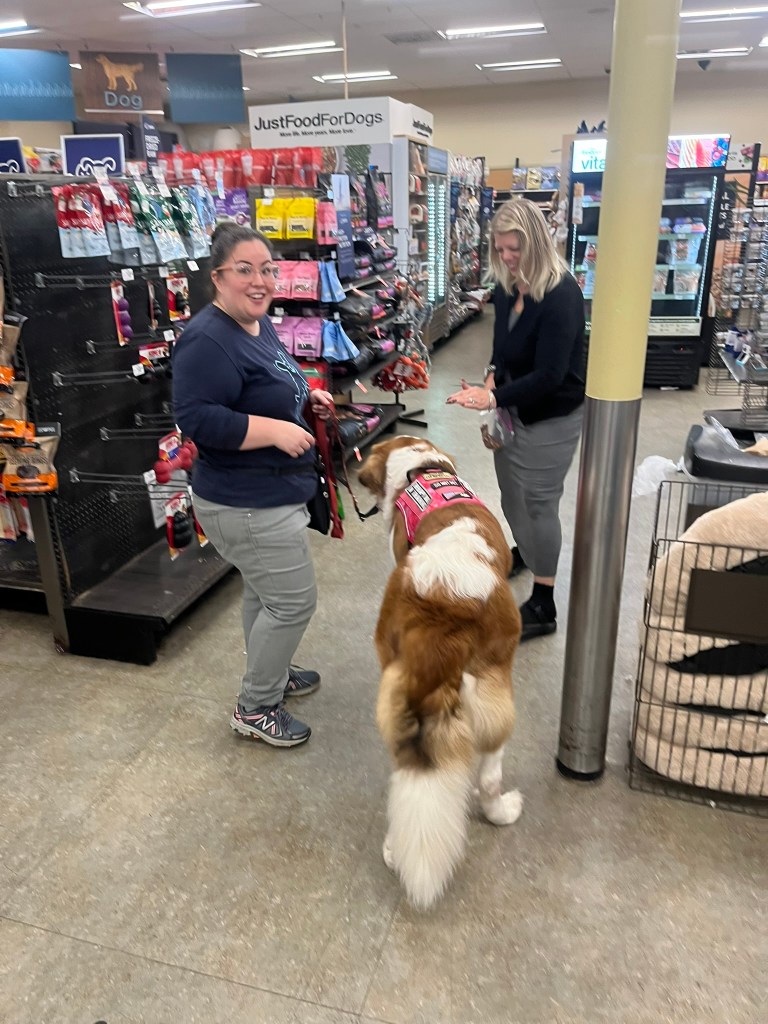
    When people see Esther, 165 pounds of gentle Saint Bernard fluff, they often can’t imagine her doing anything wrong. However, like every therapy animal, she too needs to master certain skills that ensure everyone’s safety and comfort during visits. One of the most important of these is “Leave it.”

    “Leave it” might sound simple, but in the world of Animal-Assisted Interventions, it’s a cornerstone of safety and professionalism. This command teaches therapy animals to ignore distractions, whether that’s food dropped on a hospital floor, a used tissue on a bedside table, or another animal passing by, and most importantly, medication. It’s all about impulse control and trust between handler and animal.

    💊 Why “Leave It” Matters

    In a healthcare or hospice setting, unexpected moments happen all the time. A nurse might accidentally drop a pill bottle, scattering medication across the floor. For an untrained dog, that might look like a treat, or at least something interesting to sniff. But for a therapy animal, even one curious nose near those pills could be dangerous.

    That’s where “leave it” becomes more than a command; it’s a safeguard. It ensures Esther pauses and looks to me or her trainer instead for direction, instead of investigating something that could harm her or someone else. In these moments, her restraint protects both her health and the well-being of the people we’re there to serve.

    Beyond infection control and safety, “leave it” also promotes respectful boundaries. Clients may have food trays, medical supplies, or personal belongings nearby. When Esther calmly walks past without touching, it shows professionalism and helps everyone feel secure.

    Esther practicing her “leave it” with a pill bottle, learning that safety always comes before curiosity.
    🐾 Training in Progress

    We practice “leave it” every day, both at home and on walks, as well as during training sessions. I start with small challenges, such as dropped treats, and then progress to more complex ones, like pill bottles or crinkly food wrappers. Each time Esther resists the urge and looks at me instead, she earns praise (and sometimes a reward). The goal is for the behavior to become second nature, so even when something unexpected hits the floor during a visit, she knows exactly what to do.

    Trust, Respect, and Teamwork

    “Leave it” isn’t just about obedience; it’s about trust. It says, I trust you to make the right choice, and you can trust me to keep you safe.
    That mutual respect transforms a well-behaved dog into a confident and compassionate therapy partner, one ready to bring calm and comfort, regardless of the environment.

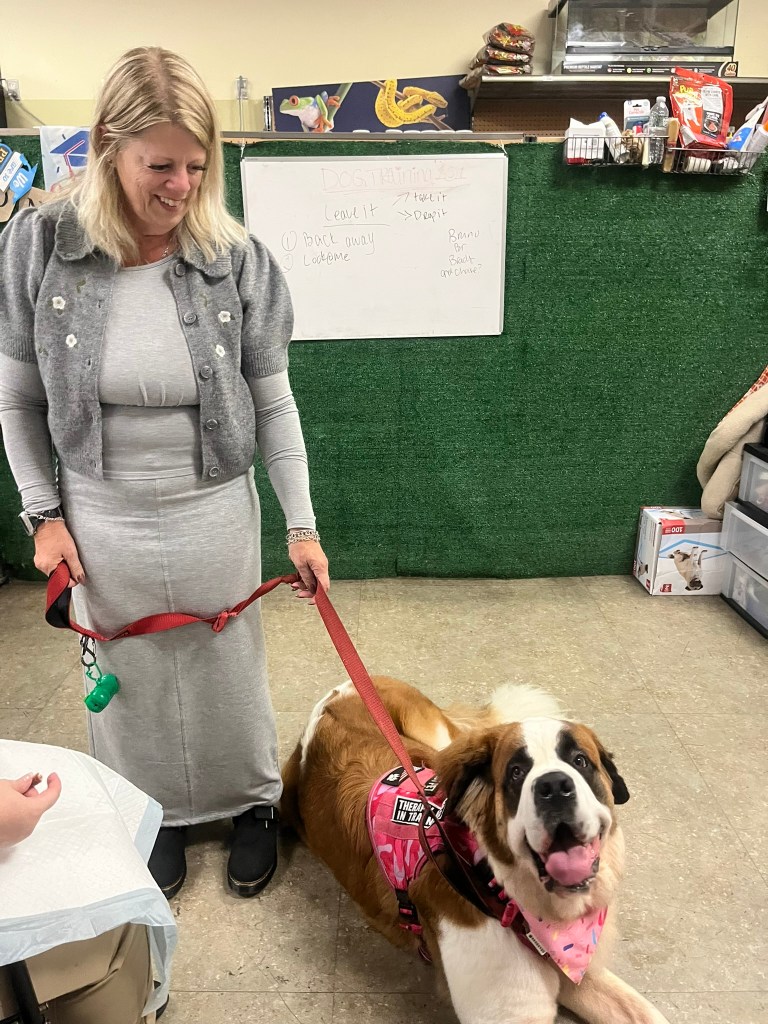
    Leave It Practice = Success! 🐾👏

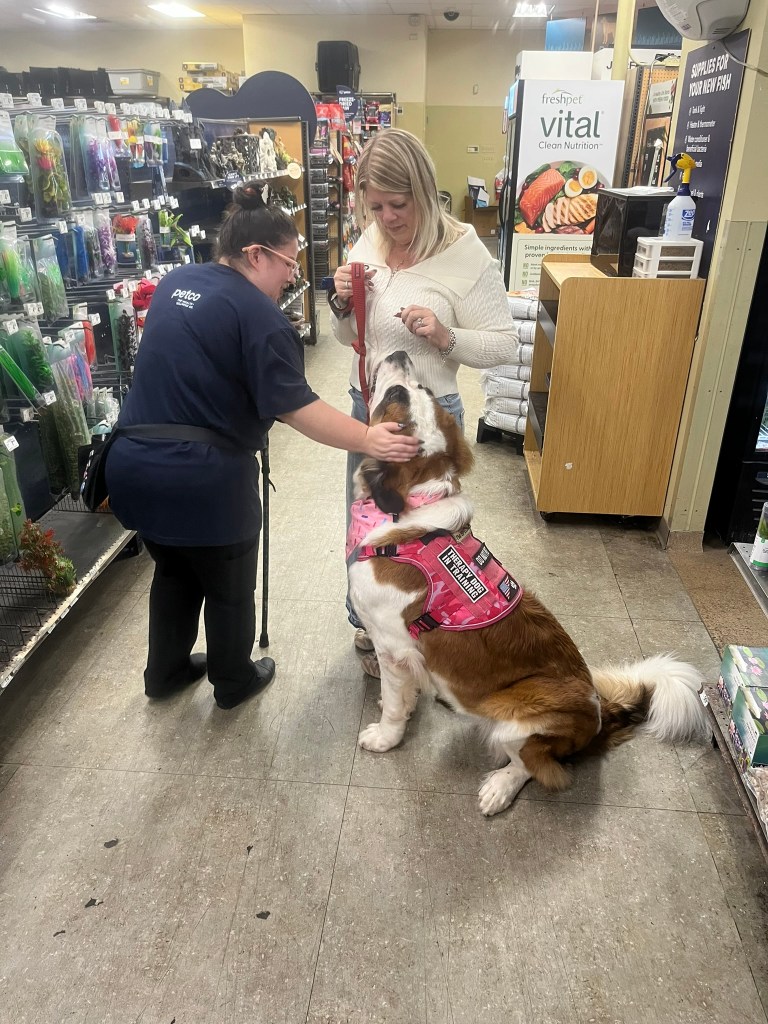
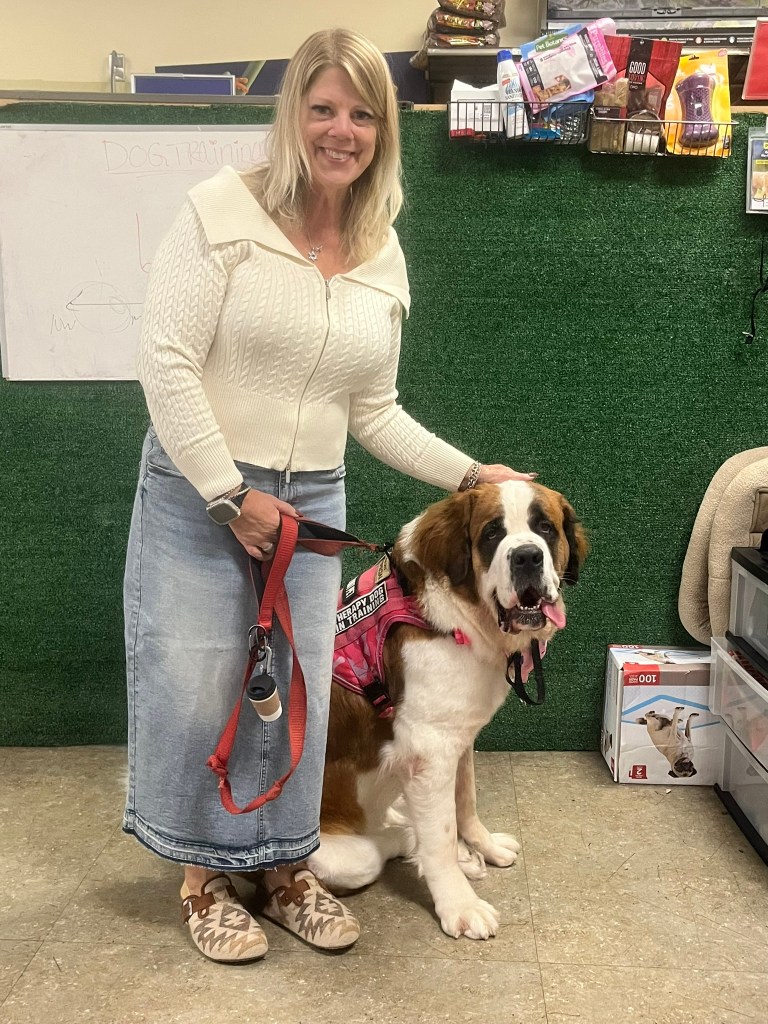
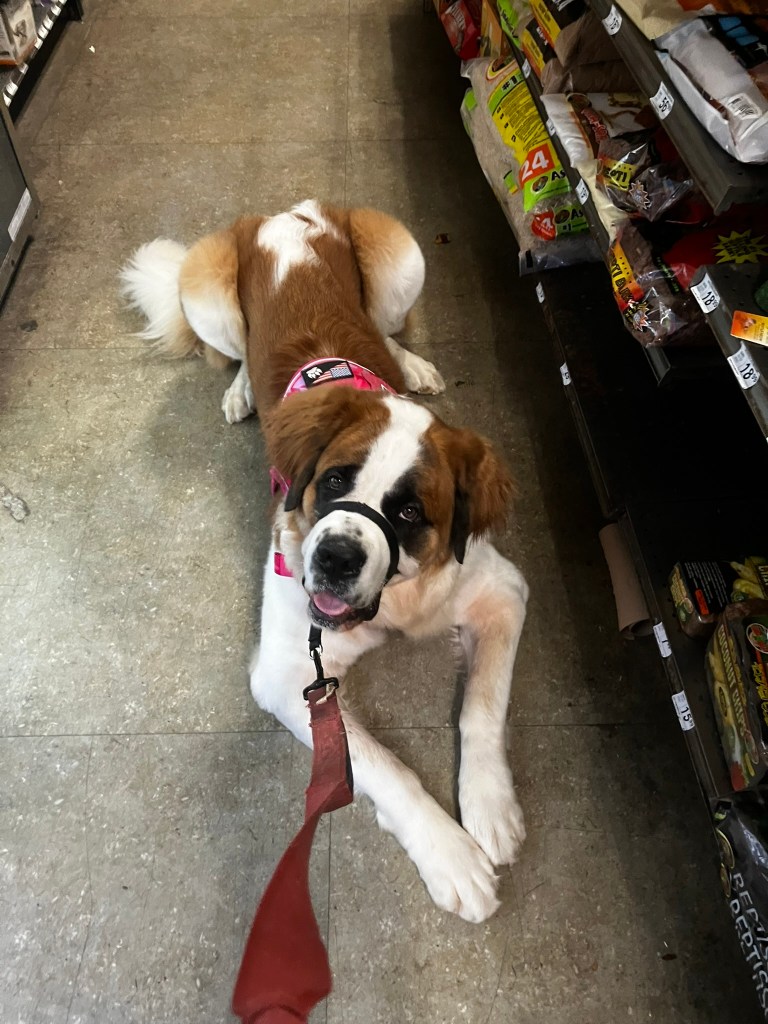
    Today at the pet store, Esther had a big training moment, and she nailed it! With treats, toys, and distractions everywhere, she practiced her “leave it” skill beautifully.

    Her trainer and I praised her for a job well done, and she soaked up every bit of that encouragement.
    Every session brings her one step closer to becoming the calm, safe, and reliable therapy partner she’s meant to be.

  • When Esther and I began our Pet Partners training, I never imagined how meaningful a simple trading card could become. These small, colorful keepsakes, featuring our therapy animals, are so much more than souvenirs; they’re a way to carry comfort beyond the visit.

    Even though Esther is still training and practicing mock visits, creating her trading cards has already become one of my favorite parts of this journey. They capture her gentle Saint Bernard spirit and allow others to remember the joy she brings, even during practice sessions.

    Esther gently meets a participant during a mock therapy visit.
    Why Trading Cards Matter

    During a visit, even a mock one, emotions often run high. People smile, laugh, and sometimes even tear up as they pet Esther’s soft fur or tell stories about their own pets. But when the visit ends, those moments can feel fleeting. A trading card offers something tangible, a small keepsake that reminds them of warmth, joy, and companionship.

    Clients can tuck the card into a book, tape it to a wall, or keep it on their nightstand. For those in long-term care or hospice, that little card can serve as a gentle reminder that love still shows up, even in the form of fur and paw prints.

    Esther’s therapy dog trading card front, with a purple sparkle border and the words ‘Forever Friend.’
    🐶 Sharing Joy and Information

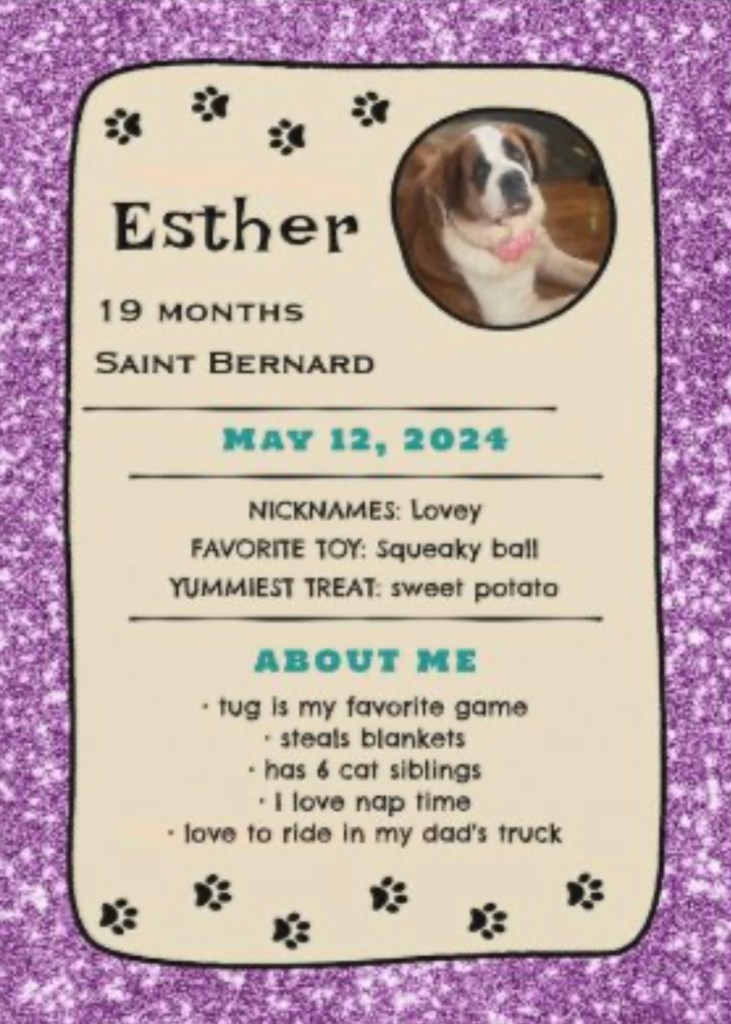
    Trading cards are also a fantastic way to share information about our therapy animals. Esther’s card includes her photo, age, breed, favorite toy (the squeaky ball, of course!), and her favorite treat, sweet potato. It helps people see her as an individual, not just a visiting dog.

    For children, cards often become fun conversation starters. They’ll ask, “What’s a Saint Bernard?” or “Does Esther really ride in her dad’s truck?” Suddenly, the visit becomes interactive, personal, and educational; just as Pet Partners hopes every interaction will be.

    Back of Esther’s therapy dog trading card with fun facts and personality details
    Connection That Lasts

    Pet Partners encourages handlers to consider how they build trust and connection, not just during visits, but between them. Trading cards act as a gentle bridge between those moments, a way to say, “I’ll see you again.”

    Even during training, Esther’s cards have helped open doors and spark meaningful exchanges. Each mock visit provides us with an opportunity to practice teamwork, communication, and empathy, the very skills we’ll carry into our future therapy work.

    When Esther completes her Pet Partners certification, these same trading cards will take on even greater significance. They’ll accompany her on real visits, to hospitals, nursing homes, and hospice centers, offering clients a way to keep a small piece of her calm and kindness close.

    Every handler’s card tells a story, and together they remind us that kindness and comfort come in many forms, sometimes on four legs with a drooly grin.

  • Preparing for Real Visits with Confidence and Compassion

    This week’s lesson, Unit 7: Putting It All Together, marks a turning point in our journey. After learning the foundations of animal-assisted therapy, infection control, and teamwork with facilities, this unit helps us envision what an actual visit will look like, from the moment we pack our bags to the time we leave the facility.

    For Esther and me, this feels like the moment where training meets heart. Everything we’ve practiced, gentle greetings, reading body language, infection control, and respectful communication, now comes together as we prepare to step into real-world settings, such as hospices and nursing homes.

    🧺 What to Bring on a Visit

    Pet Partners reminds handlers to think ahead and come prepared. That means bringing all the essentials for safety, comfort, and connection.

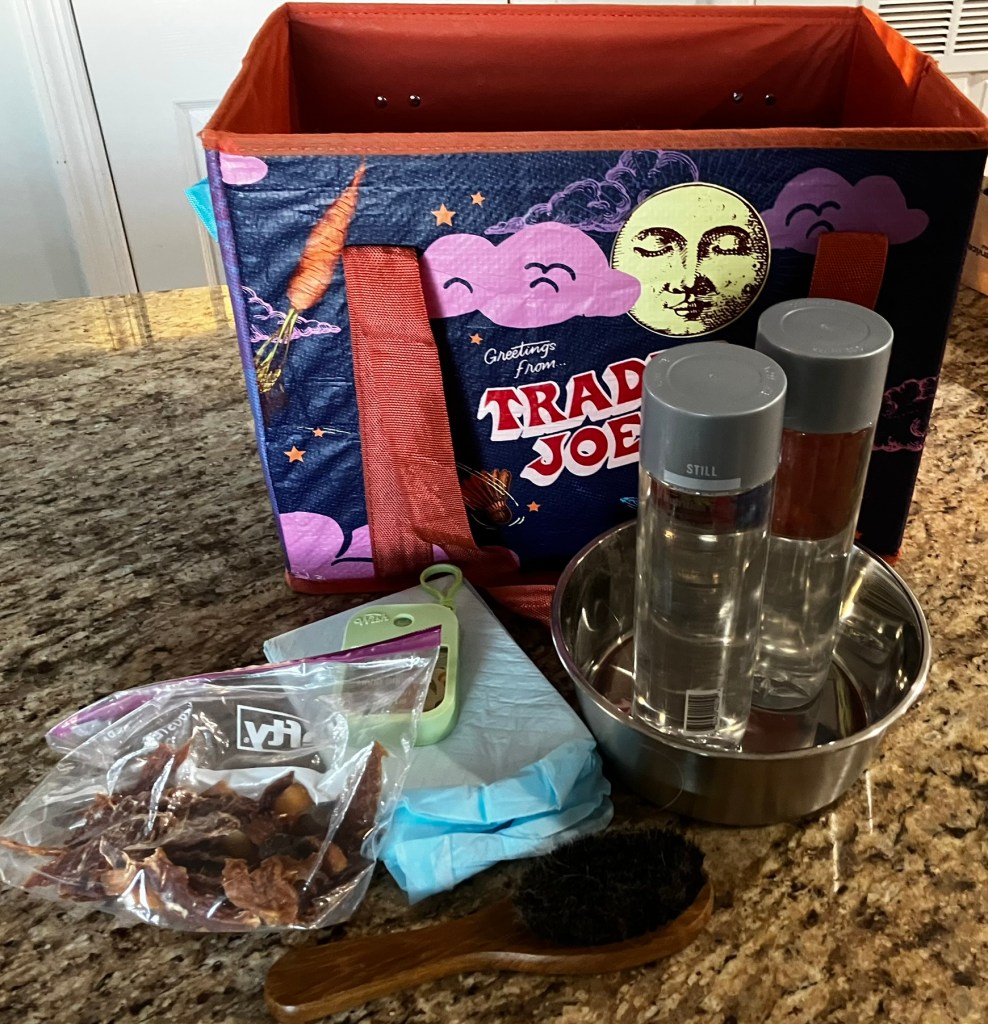
    Our visit bag checklist:
    • Fresh water and a clean bowl
    • Treats (only if permitted by the facility)
    • Soft grooming brush
    • Waste bags and wipes
    • Hand sanitizer
    • Esther’s trading cards to help spark conversation
    • A special toy that’s used only during visits
    • Clean collar, harness, and leash
    • Closed-toe shoes and professional, neat attire

    Being prepared isn’t just about organization; it’s about respect. Every clean leash, every sanitized hand, every calm greeting helps create trust and comfort for the people we meet.

    Ready for kindness, one gentle visit at a time
    🐾The Visit Snapshot

    In a Pet Partners example story, Kate and Sebastian (a mini horse therapy team) complete their first visit to a retirement home. Their day begins with a quiet check-in with staff, a quick review of who they’ll be seeing, and a gentle entrance into the first resident’s room.

    Each small moment in their visit, from offering sanitizer to reading residents’ cues and knowing when to step back, models the mindfulness and professionalism that therapy teams bring to every encounter.

    Esther and I practice the same skills during our mock visits. Before we enter the room, I check in with her. If her tail loosens and her breathing is calm, she’s ready. If she leans into me or looks away, I know to pause. These tiny check-ins are what make our partnership strong.

    Greeting new friends. Communication is everything
    Calm, Clean, and Compassionate

    A significant part of this unit focuses on infection control and professionalism, two key aspects that demonstrate respect for the people we visit. Handwashing before and after contact, avoiding shared bedding, and keeping our equipment clean aren’t just rules; they’re acts of care.

    Each visit is an opportunity to bring comfort, safety, calmness, and compassion. That’s the heart of therapy work: meeting people where they are, with empathy and presence.

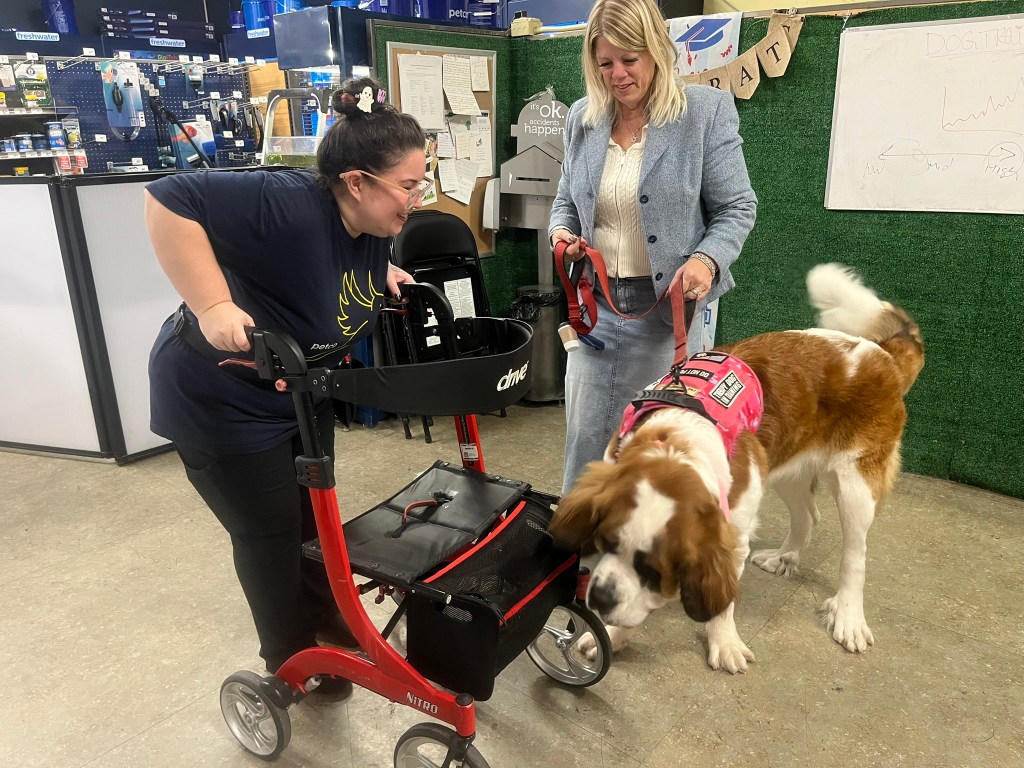
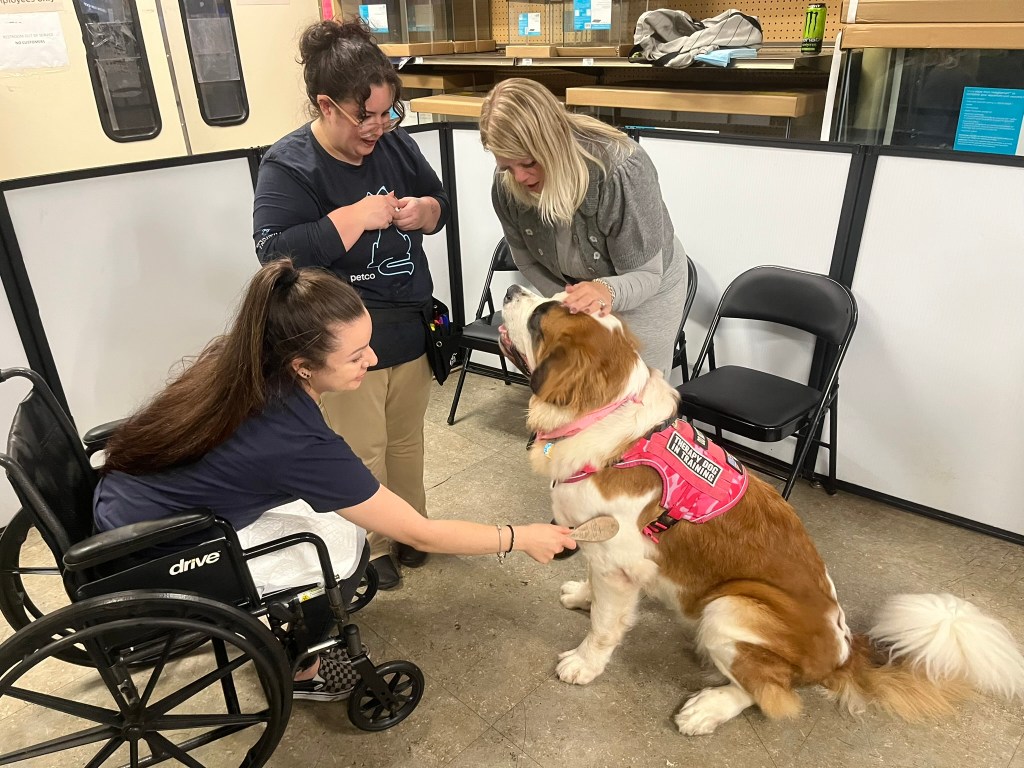
    During training, Esther practiced calmly approaching mobility aids, such as walkers and wheelchairs. Safety comes first; every greeting should be slow, gentle, and respectful of personal space
    Looking Ahead

    As we are near the end of the Handler Course, I can feel how much we’ve both grown. Esther’s confidence and calm presence are deepening with each mock visit, and I’m learning to slow down, observe, and truly listen, both to her and to those we’ll one day serve.

    We’re almost ready to take the next step: the evaluation that will mark our transition from training to service.

    It’s exciting, a little nerve-wracking, and significant, because this isn’t just a certification. It’s the beginning of the work we were meant to do together.

    Almost at the end of our Handler Course! Each week has brought new lessons in patience, safety, and partnership. Esther and I have grown so much together; soon, we’ll be ready to take our evaluation and begin our journey as an official therapy team. 🐾
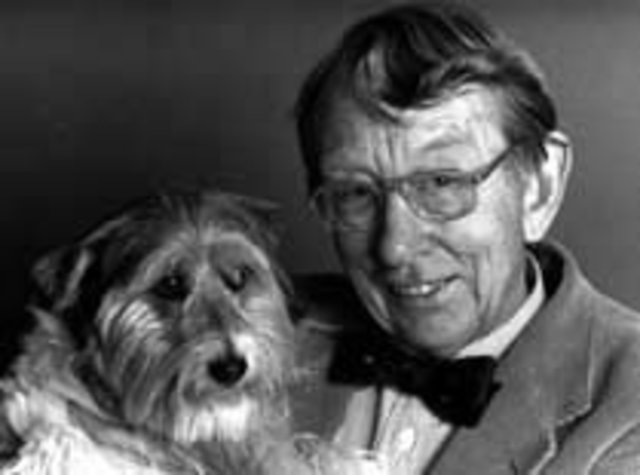
  • Dr. Boris Levinson and his therapy dog, Jingles — the pioneering pair who first revealed the healing potential of the human–animal bond in psychotherapy during the 1950s.

    Animal-Assisted Interventions (AAI) have come a long way since Dr. Boris Levinson’s dog, Jingles, broke through a child’s silence in a therapy session. What began as one psychologist’s curiosity about the comfort animals bring has grown into a respected professional field built on science, ethics, and compassion.

    In The State of Animal-Assisted Interventions, Dr. Aubrey Fine, Dr. Alan Beck, and Dr. Zenithson Ng (2019) describe how the field is moving away from simple “pet therapy” stories toward research-based practices that protect both people and animals. They believe AAI is undergoing a significant shift —one that blends heart and science and reminds us that genuine care must always be matched by integrity and responsibility.

    From Compassion to Credibility

    For a long time, animal-assisted therapy was seen as something merely heartwarming rather than clinically valid. Today, studies show measurable changes—lower cortisol and higher oxytocin levels —in both humans and animals after positive interactions. (Fine, Beck, & Ng, 2019). These findings confirm what many of us have always felt: that the simple act of connecting with an animal can help the body relax and the mind find peace.

    Fine and his co-authors remind readers that passion alone is not enough. The field needs consistent research methods, shared definitions, and intense professional training if it’s going to be taken seriously in healthcare (Fine et al., 2019). AAI works best when it complements established care, whether that’s psychotherapy, occupational therapy, or hospice work, because true healing addresses the mind, body, and spirit together.

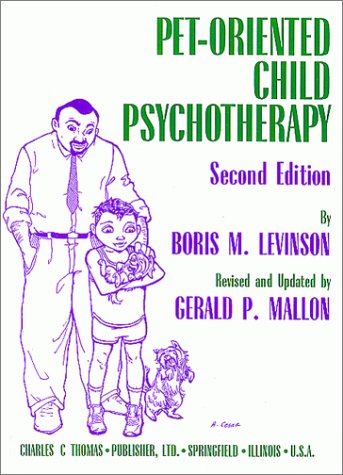
    Cover of Dr. Boris M. Levinson’s groundbreaking book, “Pet-Oriented Child Psychotherapy,” which introduced the concept of using companion animals as co-therapists in clinical settings
    Centering Animal Welfare

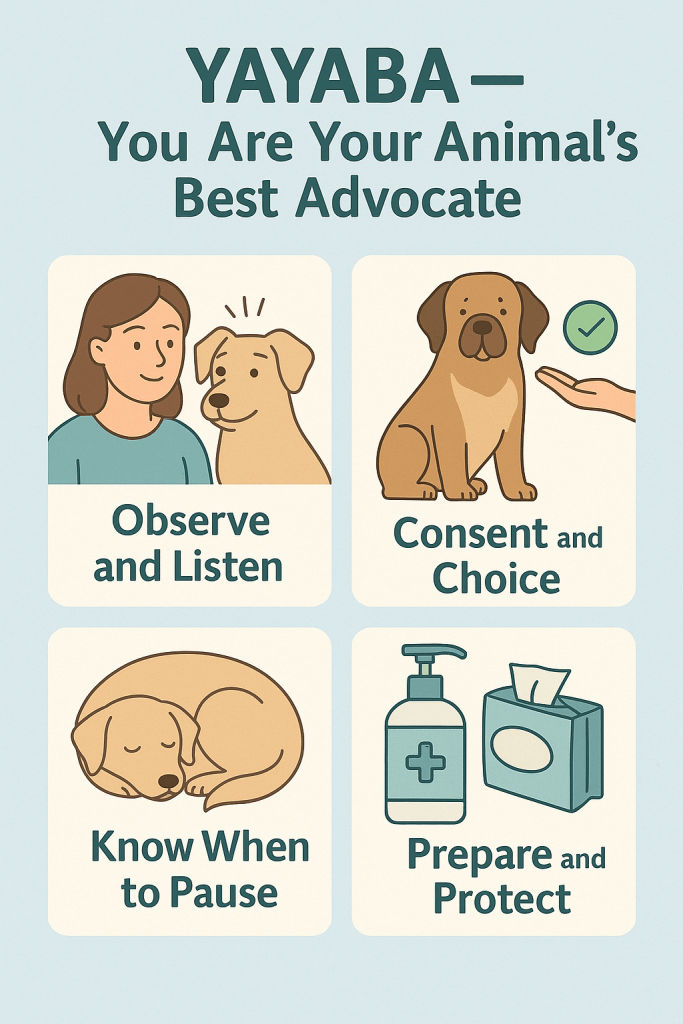
    One of the most important messages in the article is the need to protect the well-being of the animals that make this work possible. As Pet Partners says, “YAYABA—You Are Your Animal’s Best Advocate (Ketter, 2019).” Every visit must safeguard the animal’s comfort and consent. That means paying attention to body language, offering breaks, and knowing when it’s time for a therapy partner to rest or retire.

    The authors explain that animal welfare isn’t just a moral issue; it’s vital to the success of therapy. When animals feel safe and respected, the connection they offer becomes even more meaningful (Fine et al., 2019). Studies of canine stress hormones and behavior suggest that well-handled therapy animals experience little harm and may even benefit emotionally from human contact.

    YAYABA — You Are Your Animal’s Best Advocate: A gentle reminder for therapy handlers to observe, respect, and protect their animal partners through mindful care, consent, rest, and preparation.
    Professionalization and Policy

    The growth of Animal-Assisted Interventions depends on having strong ethical standards and ongoing education for everyone involved. Groups such as the International Association of Human–Animal Interaction Organizations (IAHAIO)and Pet Partners have helped shape this effort by creating clear definitions and wellness guidelines that protect the animals who participate (Fine et al., 2019).

    The authors also point out that research plays a key role in influencing policy. When studies demonstrate the positive impact of AAI, it helps expand opportunities for programs in hospitals, schools, and hospice settings to receive the recognition and support they deserve (Fine et al., 2019).

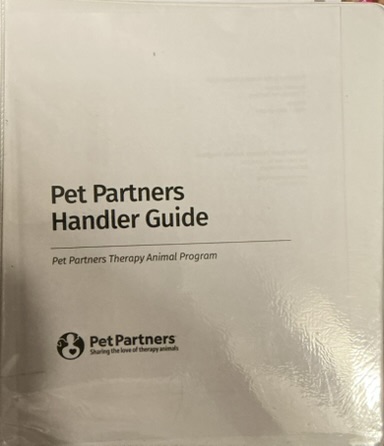
    Pet Partners Handler Guide — a cornerstone of professional training that ensures every therapy team is prepared, ethical, and ready to represent the field with excellence.
    Looking Ahead

    Fine, Beck, and Ng (2019) close by quoting Steve Jobs: “You cannot connect the dots looking forward; you can only connect them looking backwards.” The field’s growth—from Levinson and Jingles to today’s global research—shows how far AAI has come (Fine et al., 2019).

    As someone training my Saint Bernard, Esther, to become a certified therapy dog, I found this article both grounding and inspiring. It reminds me why the long hours of preparation, certification, and continued education are worth it. Each visit we’ll make to a hospice or nursing home will be built on a foundation of trust, empathy, and evidence-based care.

    The future of AAI isn’t just about helping people feel better. It’s about creating a shared space of wellbeing for both species 🐾 one gentle paw and one open heart at a time.

    References:

    Fine, A. H., Beck, A. M., & Ng, Z. (2019). The State of Animal-Assisted Interventions: Addressing the Contemporary Issues that will Shape the Future. International Journal of Environmental Research and Public Health, 16(20), 3997.

    Ketter, K. (2019, July 15). Stories of YAYABATM in Action. Pet Partners. https://petpartners.org/stories-of-yayaba-in-action/

  • Why Esther’s Health and Vaccinations Matter in Therapy Work

    When people see a therapy dog like Esther, they often notice her calm presence, her gentle eyes, and her comforting energy. What they might not realize is how much care goes into the background to ensure she’s healthy, safe, and ready to serve others.

    Therapy animals are ambassadors of health and compassion, and that begins with their own well-being. A visit can only be meaningful if it’s safe for everyone involved: the clients, the staff, and the animal partner.

    That’s why maintaining excellent health and current vaccinations aren’t just recommendations; they’re requirements for Pet Partners registration and a moral responsibility for every handler.

    🐾 Wellness Is the Foundation of Trust

    Before Esther and I can walk into a facility, whether it’s a hospice, a children’s hospital, or a nursing home, I must be sure she’s in top condition. Pet Partners requires that all therapy animals:

    • Have annual veterinary exams
    • Stay up to date on core vaccinations (rabies, distemper, parvovirus, and bordetella)
    • Be free of parasites and on year-round flea, tick, and heartworm prevention
    • Show no signs of illness or injury before a visit
    • Maintain a healthy coat, clean ears, and trimmed nails

    If a therapy animal isn’t feeling their best, even something small, like an upset stomach or fatigue, the visit should be postponed. The people we meet deserve our full presence, and our animals deserve rest and care when they need it.

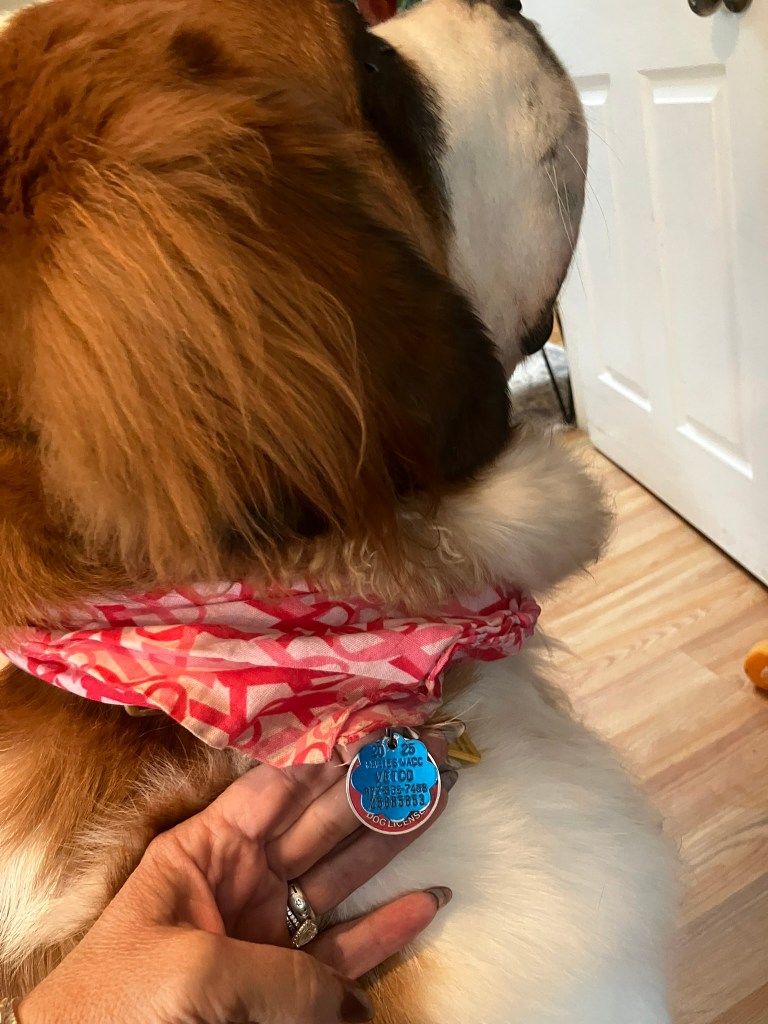
    Safety first, always. Esther’s rabies tag is her badge of wellness! 🐾
    🌼 Caring Goes Both Ways

    As handlers, we ask so much of our animals: patience, gentleness, and focus in busy environments. The least we can do is care for their health with the same dedication they offer others.

    Keeping Esther healthy isn’t just about rules or paperwork; it’s about love. It’s the promise I make to her as my partner: that her comfort, safety, and happiness always come first. Because only when she’s thriving can she share that same healing energy with others.

  • Building Trust and Teamwork in Therapy Settings

    One of the most essential lessons from Unit 6 is that therapy animal visits aren’t just about the handler and the animal; they’re about teamwork and collaboration. Each visit is a collaborative effort between the visiting team, the staff, and the individuals receiving care. A successful visit depends on effective communication, mutual respect, and thorough preparation.

    When Esther and I visit facilities, we will be mindful that we’re stepping into someone else’s space; a space where emotions, medical care, and daily routines intersect. Our role is to support, not disrupt. Facilities have their own rhythms, infection control policies, and safety protocols for good reasons. By learning and following them carefully, we will help protect the people we serve and build trust with staff.

    🤝 The Importance of Collaboration

    Partnering with a facility means understanding that every visit happens as part of a larger care plan. Staff members know their clients best, who may enjoy a visit, who might be fearful of animals, or who may need rest instead of company. By checking in with them first, we respect both professional boundaries and emotional readiness.

    I’ve learned that asking, “Is now a good time for a visit?” is one of the most respectful questions a handler can ask. It shows consideration for the client’s comfort and for the staff’s workflow.

    Good communication also extends beyond words. Reading the room, noticing nonverbal cues, and knowing when to step back are all vital skills for therapy animal teams.

    Practicing Collaboration
    Smiles all around: Esther, in her pink therapy vest, is happiest when she’s working together as part of a team.
    Safety, Cleanliness, and Professionalism

    Therapy visits bring comfort, but they must also protect health and safety. That’s why Pet Partners emphasizes infection control.

    Before and after each interaction, handlers and clients should sanitize their hands. Esther’s grooming and cleanliness are just as important; she’s brushed before every visit, wears a clean vest, and avoids jumping up or licking.

    Professionalism also includes dressing appropriately, arriving on time, and having all necessary supplies ready: a brush, wipes, paperwork, and, of course, Esther’s water bowl. It’s these small details that communicate reliability and respect for the facility’s expectations.

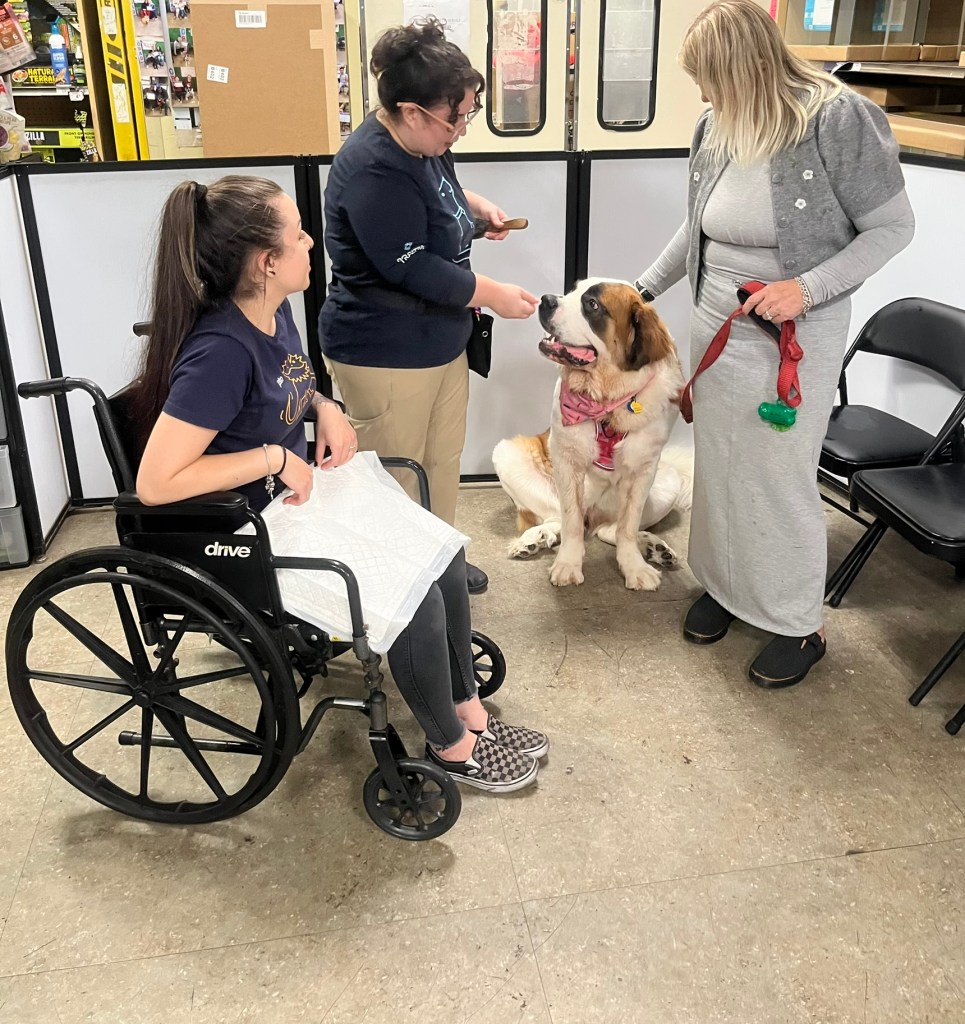
    During our mock visit, Esther practices patience and gentle eye contact while meeting a participant using a wheelchair. Every calm moment builds trust and understanding.
    🐾 Respecting Boundaries and Roles

    Handlers must remember that we’re guests, not staff members. We don’t give medical advice or handle private information. Our visits should always support, never replace, the therapeutic goals of the facility’s professionals.

    Esther’s gentle presence can enhance what’s already happening in the environment: offering quiet companionship in hospice or sparking conversation in memory care. She doesn’t need to “do” much, just be.

    Preparing for Future Visits

    To build our confidence, Esther and I have started conducting mock visits that closely mirror real facility settings. During these practice sessions, we work around medical equipment, such as wheelchairs and walkers, so Esther can learn to navigate safely in tighter spaces. We practice gentle greetings, respectful approaches, and calm transitions when moving between “rooms.”

    These mock visits have been incredibly valuable — they’ve helped us understand how to navigate different environments, maintain focus even in the face of distractions, and collaborate smoothly with others in a care setting. Each session brings us one step closer to being ready for real visits in hospices and nursing homes.

    Partnering with a facility isn’t a one-time arrangement; it’s an ongoing relationship built on mutual trust, professionalism, and compassion. Esther and I are excited to take these lessons forward, one gentle step at a time.

  • As Esther and I continue our Pet Partners Handler Course, Unit 5, “Visit Best Practices“, it feels like a significant turning point. It leverages all the foundation we’ve built in communication, teamwork, and safety to apply it to what matters most: creating meaningful, safe, and compassionate visits for those we serve.

    The Parts of a Visit

    Every visit has three essential parts: the approach, interaction, and closure. For Esther and me, the approach means entering with calm energy, announcing ourselves, and always asking permission before approaching a client. As a giant-breed therapy dog, Esther’s presence can be overwhelming, so it’s vital that clients feel comfortable and in control.

    Esther practices patient and calm greetings during wheelchair training.

    During interaction, I will guide Esther to the client’s side, never allowing her to lead, and remind people where she likes to be petted (under the chin or on her shoulder). These moments will build trust and create the bridge that connects the client and the animal. And when it’s time to say goodbye, we will make sure to leave a sense of warmth and continuity by saying, “Esther and I will see you again soon.”

    Safety, Hygiene, and Infection Control

    The guide reminds handlers that clean hands save lives. Each visit begins and ends with hand sanitizer or handwashing for both me and the client. I’ve started practicing this with Esther by making it part of our ritual: before and after every training session, she sits patiently while I “sanitize.” It’s a small, symbolic act of professionalism and care.

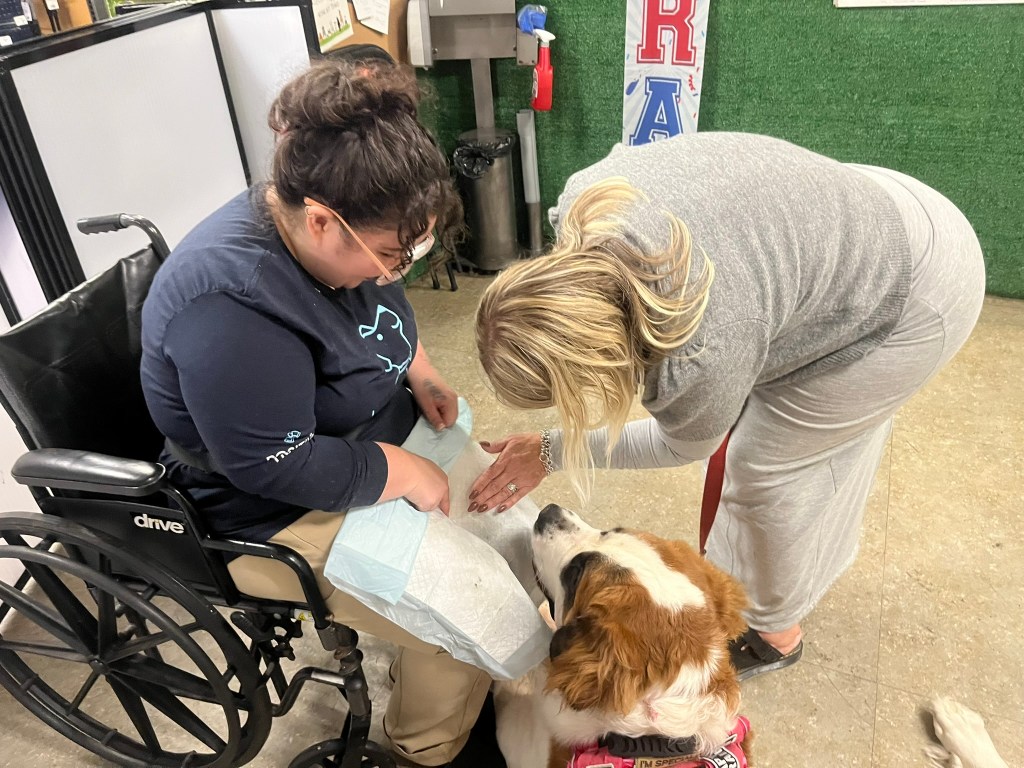
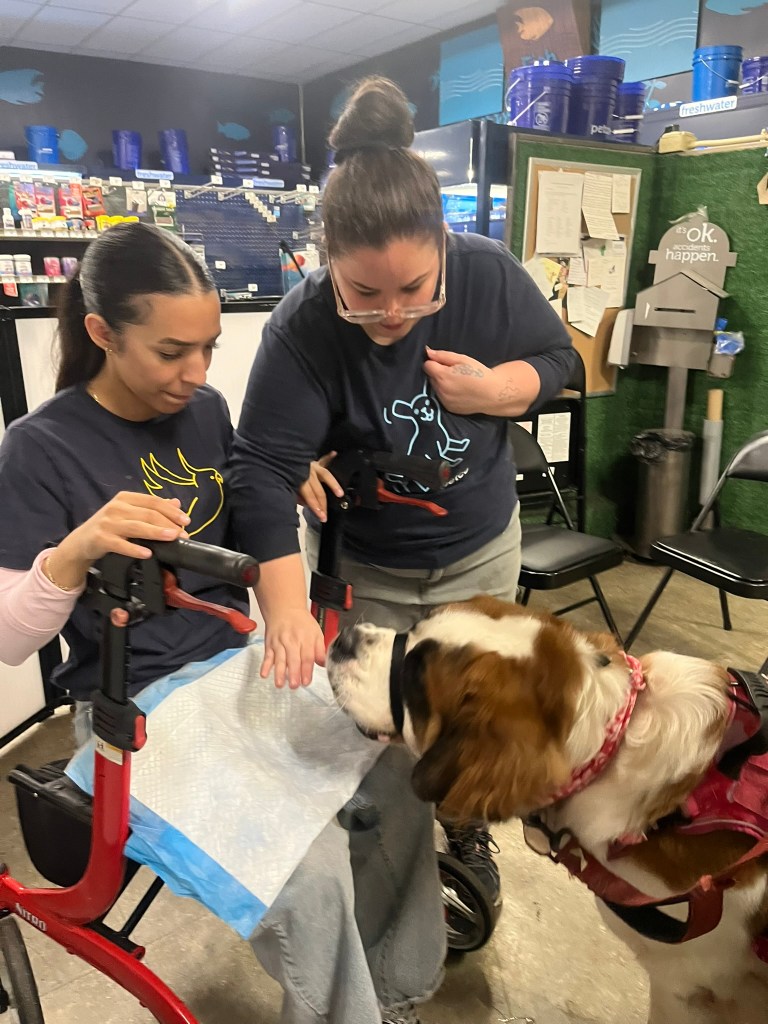
    I also learned that infection control includes using barriers (such as disposable pads) if Esther is ever invited onto a bed or chair or even to put her head on someone’s lap and ensuring she doesn’t carry anything between rooms. These steps may seem minor, but they protect both clients and animals, demonstrating that we take our role seriously.

    Esther practices calm interaction during training while a clean safety barrier is placed on the client’s lap, an important step in infection control and comfort for both client and therapy animal
    Visiting Groups and Other Teams

    For a dog of Esther’s size, group visits require extra awareness. Unit 5 emphasizes reading the room, watching for distractions, noise levels, and potential sources of stress. Esther’s training sessions now include group interactions with multiple people talking or reaching out at once, simulating the kind of excitement she’ll experience in a real facility.

    If multiple therapy animals are present, handlers should keep a safe distance (about three animal lengths apart). This ensures calm, controlled environments where every animal and every client feels secure.

    Conversational Techniques and Respectful Language

    Unit 5 also dives into how handlers communicate. Using person-first language (“person with Alzheimer’s” rather than “an Alzheimer’s patient”) and honoring pronouns shows respect and empathy. These choices remind clients they are people first, not defined by their illness or situation.

    In conversation, the goal is to listen more than talk, to invite stories rather than interrogate. Sometimes, the most healing moments will occur in silence, as Esther rests her big head gently on someone’s hand.

    Watching for Stress: In Them and Us

    A powerful reminder in this module is that stress can affect anyone, including clients, staff, handlers, and animals. Esther’s signals are subtle: a sigh, turning her head away, or licking her lips. When I notice those cues, it will be time to pause or end the visit early. As the guide says, it’s never a failure to step back; it’s a mark of being your animal’s best advocate.

    Reflecting on Growth

    Unit 5 has shown me that successful visits aren’t about perfection; they’re about presence. Each time Esther and I train, I see her becoming more intuitive, reading my cues, and trusting that I’ll always keep her safe. That trust is what we’ll carry into every visit, from hospice rooms to nursing homes, and anywhere her gentle heart is needed.

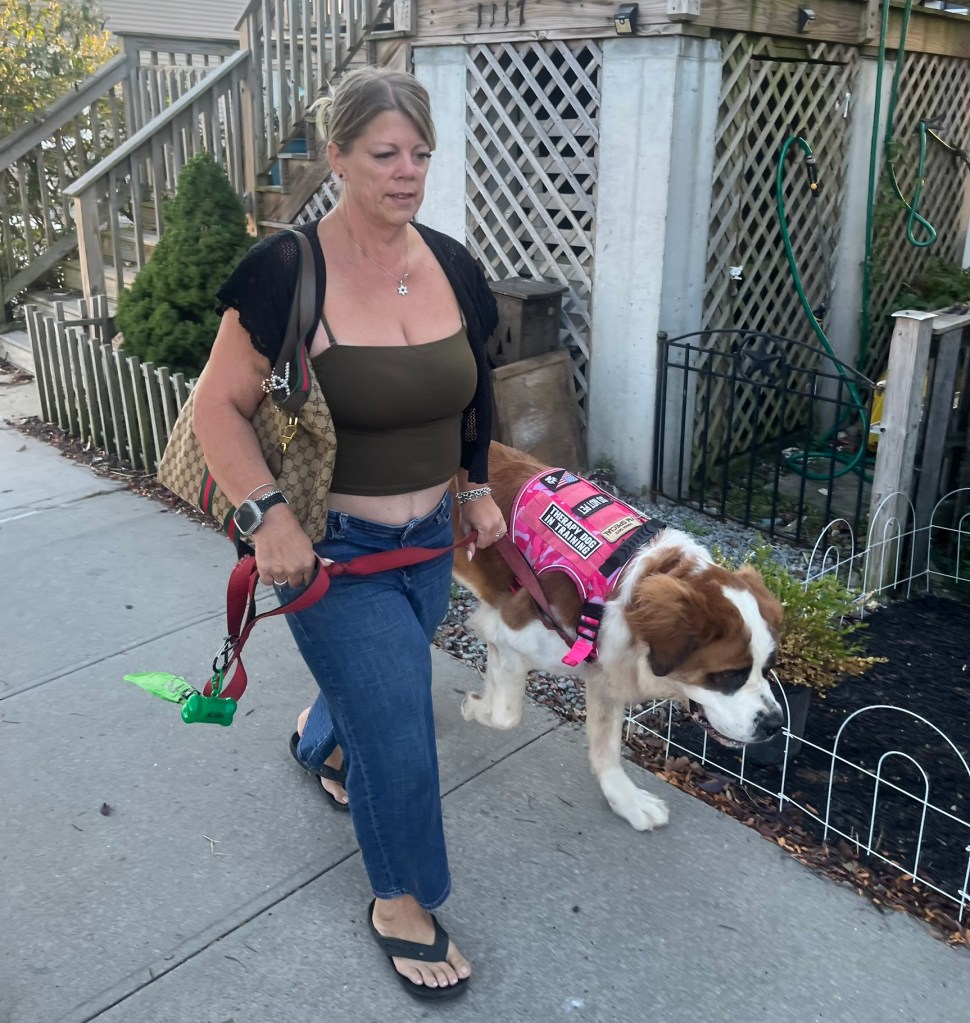
  • During training walks, I focus on maintaining calm and steady energy so Esther can mirror that confidence, an essential skill for therapy visits in busy environments.
    Understanding the Evaluation

    As Esther and I continue our Pet Partners handler course, Unit 4, The Team Evaluation, stands out as one of the most critical steps in our journey toward becoming a registered therapy team.

    This module outlines how Pet Partners evaluates both the handler and the animal as a team, focusing not only on the animal’s temperament but also on how well the handler supports and advocates for them during various scenarios.

    Real-Life Scenarios and Teamwork

    The evaluation is designed to simulate real-life situations we might encounter during visits, whether in hospice, hospitals, schools, or community settings.

    It’s a moment to demonstrate confidence, teamwork, and calm under pressure. Exercises include interactions such as:

    • Clumsy petting
    • Loud noises
    • Sudden gestures
    • Being crowded by multiple people

    These moments test how both handler and animal respond together; something I’ve been practicing with Esther during her private training sessions.

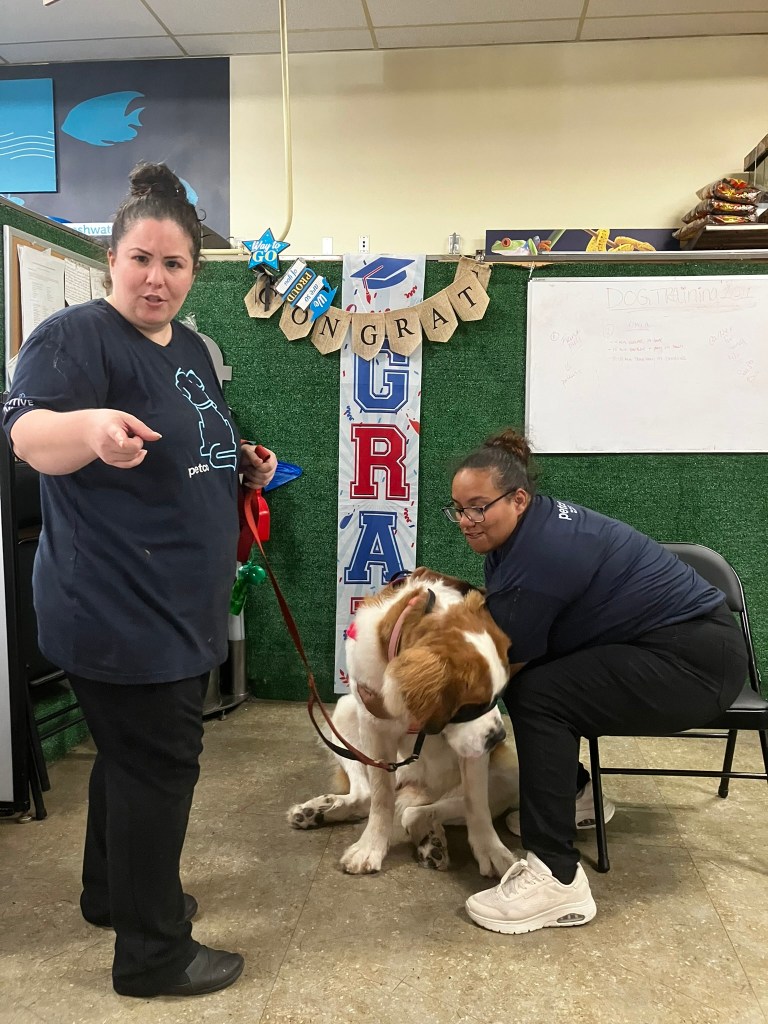
    Esther practices staying calm during a “crowded petting” exercise with her trainers—a key part of the Pet Partners evaluation that prepares her for real-life therapy visits filled with unexpected sounds, movements, and emotions.
    Esther’s Gentle Strength

    For Esther, who weighs 165 pounds, being calm and steady during unpredictable moments is essential.

    One of the exercises, Staggering and Gesturing Individual, mimics someone who is unsteady or emotional approaching her. The goal is for her to stay relaxed and confident while I manage the situation with empathy and control.

    Another scenario, Crowded and Petted by Several People, tests how well she can tolerate attention from multiple hands while I monitor her body language and help her stay comfortable.

    Focused and gentle, Esther showing her best therapy dog manners.
    Building Trust and Communication

    What I love about the Pet Partners approach is that it doesn’t just evaluate the animal, it evaluates the relationship.

    The assessment reflects the level of trust and communication between handler and animal. I’ve learned that proactive handling; anticipating Esther’s reactions and supporting her before she feels stressed, is key to our success.

    The better I understand her signals, the more I can help her shine as the gentle giant she is.

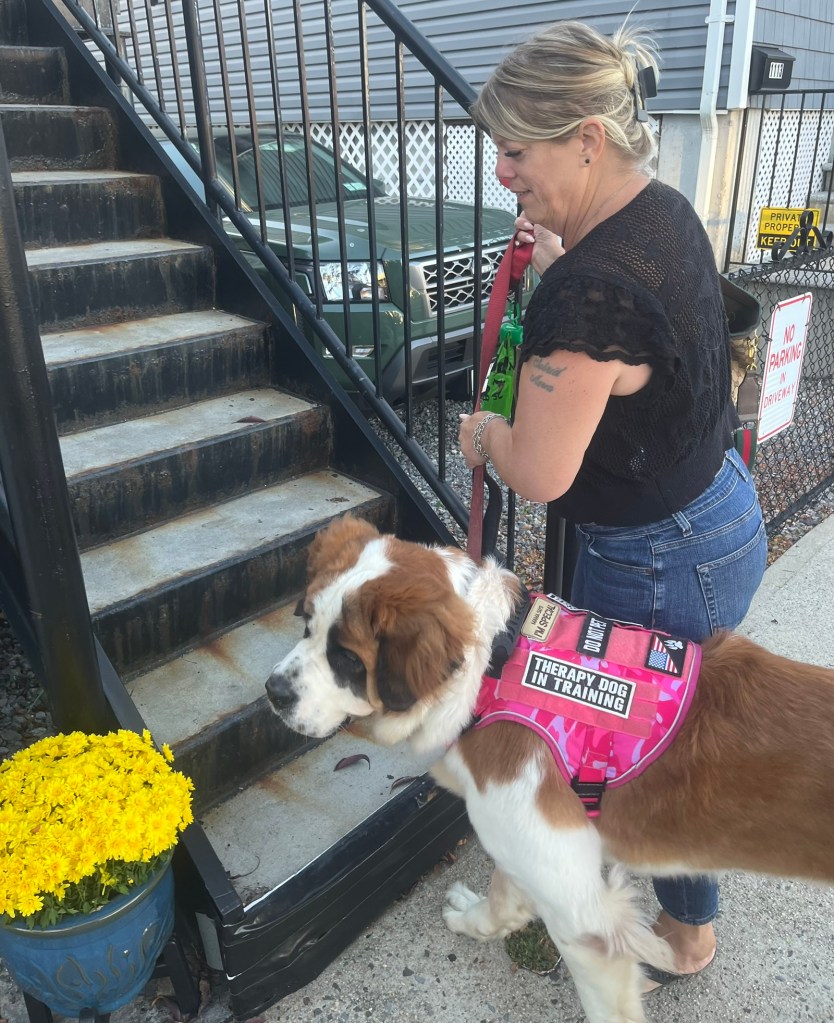
    I am guiding Esther, my Saint Bernard therapy dog in training, up the stairs during a practice session. Each step builds Esther’s confidence and teamwork for real-world therapy visits.

    Connection Over Perfection

    Ultimately, the team evaluation isn’t about perfection; it’s about connection.

    It’s a reminder that Esther and I are learning together, and that my calm, encouraging energy directly shapes her confidence in new environments. Whether we pass on the first try or need more practice, I see this process as another step toward sharing her love and comfort with others in hospice and end-of-life settings.

  • When preparing an animal for a therapy visit, grooming is much more than a cosmetic step, it is an essential part of ensuring comfort, health, and professionalism. For therapy teams, appearance and hygiene directly reflect the standard of care offered to clients, many of whom may be vulnerable or immunocompromised.

    Why Grooming Matters

    Health and Safety for Clients
    Clean, brushed coats reduce shedding and dander, which helps minimize allergic reactions. Nails trimmed to a safe length prevent accidental scratches, and clean paws and coats mean fewer germs brought into sensitive environments like hospitals and hospice.

    Comfort for Your Pet
    A well-groomed dog feels more comfortable during interactions. Mats, tangles, and overgrown nails can cause pain or discomfort, making it harder for your animal to stay calm and engaged during therapy work.

    Professional Appearance
    As a therapy team, we represent professionalism and reliability. A freshly groomed dog presents an image of care and dedication that reassures staff, clients, and family members.

    Bonding and Routine
    Grooming sessions strengthen the bond between handler and animal. For giant breeds like my Saint Bernard, Esther, grooming is also a grounding routine that helps her stay relaxed and confident when she will be entering therapy environments.

    Esther at the Groomer

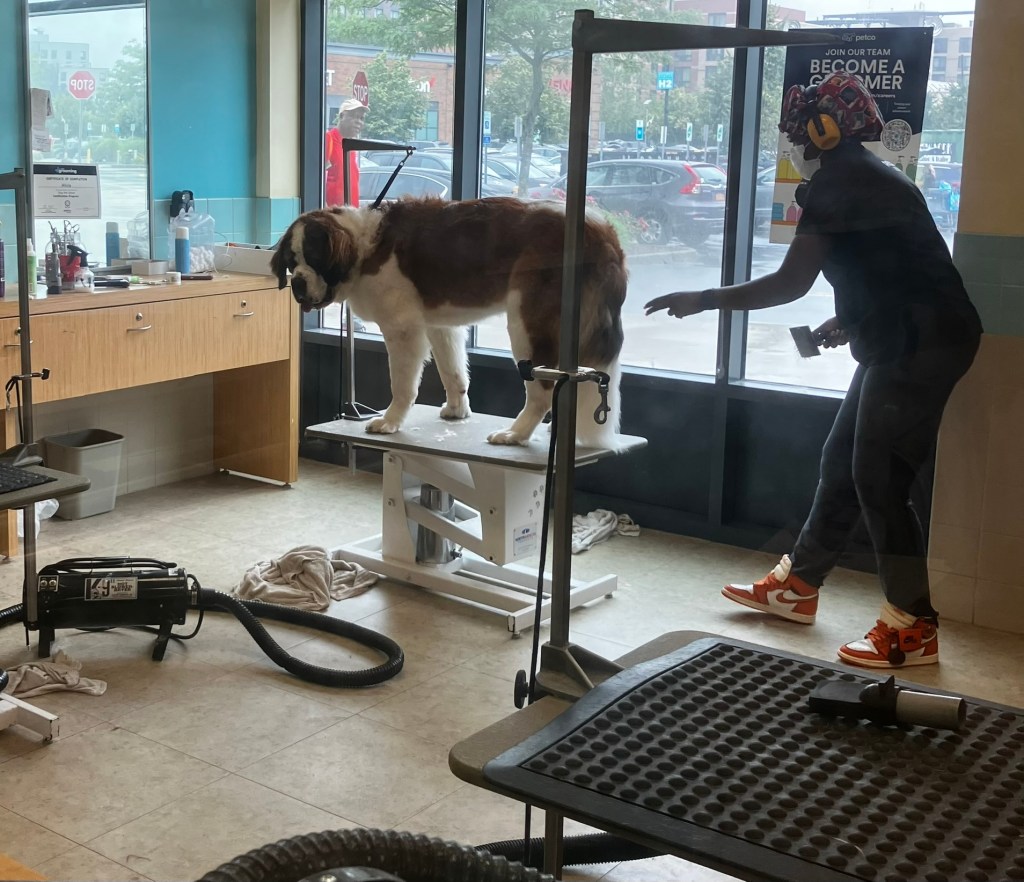
    Here’s Esther, my 165-pound Saint Bernard, getting her grooming done before upcoming therapy training session:

    Esther patiently stands at the groomer’s table during her spa day.
    A Peek Behind the Scenes

    Video of Esther’s grooming in progress — keeping her coat healthy and her demeanor calm:

    Gentle grooming prepares Esther to meet clients with her best paw forward.

    Final Thoughts

    Taking the time to ensure Esther is well-groomed shows respect for the people we will serve and care for the comfort of my animal. A clean, comfortable, and happy pet is best able to provide the healing presence therapy visits are meant to bring.