Anna Spreckels, MA | Thanatologist | End-of-Life Doula | MSW Student

  • MSW student (Liberty University)
  • MA in Thanatology (CUNY Brooklyn College)
  • Thanatology & community health professional
  • Volunteer bereavement support caller (Accent Care Hospice)
  • Trained end-of-life doula
  • Working toward grief & bereavement therapist licensure
  • Guided by compassion, dignity, and the belief that no one—human or animal—should face death alone
National End-of-Life Doula Alliance (NEDA) Member Badge
  • The waves of losing a sibling to suicide, nearly 26 years later

    Content note: This post discusses sibling loss, suicide, and traumatic grief.

    My brother John died by suicide on February 21, 2000, at 2:30 in the morning. Nearly 26 years have passed, but I still remember the date and time as if they were carved into me.

    Most days, I live the life I have built. I am a wife, a mother, a student, a thanatologist, and an end-of-life doula. I study death, dying, grief, and bereavement. I understand continuing bonds, traumatic grief, meaning making, and the way grief changes over time. I have spent years learning the language and frameworks that help us understand death and loss.

    But John is not a framework. He is my brother.

    And sometimes, he still comes crashing into my life.

    It can happen through a song, a memory, or a photograph. Sometimes it feels as though his spirit washes over me like a wave, and for a moment I can feel the anguish he carried. It is not all of me. It does not control my life. The intensity is not what it was many years ago. Still, every so often, the distance between February 2000 and the present disappears.

    I let the wave come.

    There is a photograph of John and me at a friend’s wedding during the summer before he died. I love that picture. He is wearing a blue shirt and smiling a soft, beautiful smile. We are standing close together with our hands clasped. He is alive. He is my brother. That photograph should be able to remain exactly what it is: a loving moment between two siblings at a wedding.
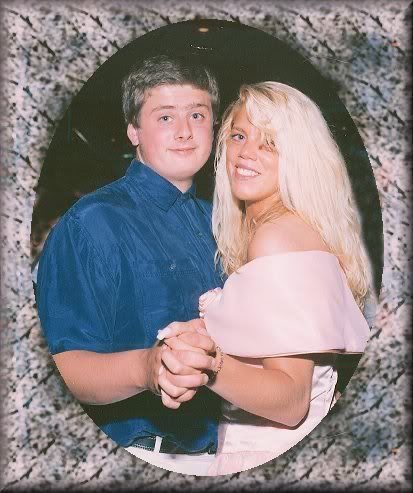
    John David 8-28-77 to 2-21-00

    But sometimes, when I look at his smile, another image takes over.

    I had to identify John’s body at the morgue. I saw the violence that his death had done to his beautiful face. Later, my mother chose to have an open-casket funeral and asked the funeral home to reconstruct his face. I still do not understand why. For me, it was a second trauma layered on top of the first. Instead of being able to hold on to the face I had known throughout our childhood, I was confronted again with the manner of his death.

    The photograph and those traumatic images now exist in the same mind. I cannot simply choose one and erase the other. If grief worked that way, I would have done it years ago.

    People often reach for phrases when someone dies by suicide. They call it “selfish,” or they say it was “a permanent solution to a temporary problem.” I have never found those words helpful. They reduce unbearable human suffering to a slogan. John was not selfish. He was in anguish. Whatever was happening inside him had become more than he believed he could survive.

    My mother said that John went to hell. I never believed that. I do not believe that a suffering soul is condemned because pain overwhelmed his ability to keep living. I believe that when it is a person’s time to die, somehow the universe lets them go, regardless of how the death happens. That belief does not mean I would ever stop trying to protect someone who is still alive. We cannot know when another person’s time has come, so we reach for them, help them, and do everything we can to keep them here. But after John died, I refused to make shame or punishment part of his story.

    For many years, I had my sister Heidi to talk to about him. We talked about John constantly; through ordinary conversations, holidays, and vacations. We talked about how much we missed him. We searched our memories for things we thought we might have missed. Heidi understood without explanation because she was not only grieving John; she was his sister too. She carried the same childhood history and knew the person he had been before that final moment.

    Then Heidi died in 2020.
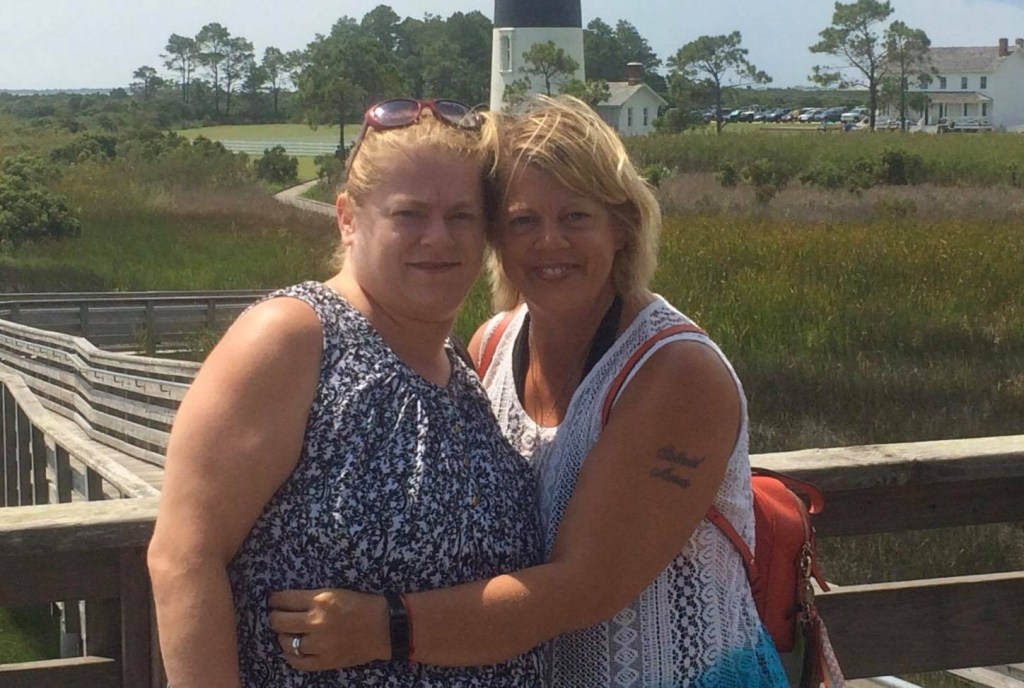
    Heidi Linda 12-16-74 to 3-23-2020

    When she died, I also lost the only other person who could miss John with me in exactly that way. There is a loneliness in being the sibling left behind; the one still holding the memories of both of them. I miss my brother. I miss my sister. And I miss having my sister here to talk with about how much we miss our brother.

    This is part of why I do the work I do. Their deaths did not happen so that I could discover a purpose, and I would never try to make something so painful sound beautiful or necessary. But the love I still have for John and Heidi needs somewhere to travel. I want my hand to touch someone else and bring them some measure of comfort. That might mean sitting beside a person in hospice, supporting someone who is grieving, being present with someone choosing medical aid-in-dying, or giving a veteran room to speak about grief that others may not understand.

    I do not care whether every act of compassion earns money. Some moments are too sacred to measure that way. I simply want another human being to feel less alone.

    Still, I do not have to turn every wave of grief into service. I do not have to make my pain useful every time it rises. Sometimes I am not “Anna the Thanatologist.” Sometimes I am simply AnneMarie, John and Heidi’s sister, missing them.

    Nearly 26 years later, I have not failed to heal because John still lingers. Healing does not require forgetting his face, silencing his name, or reaching a point where his death can no longer hurt me. I have learned how to live a full life while continuing to love someone who is no longer physically here. Most of the time, I carry that love quietly. Sometimes it comes in like a king tide.

    When John comes crashing in from the universe, I let him crash. I let myself feel it. The wave rises, and eventually it recedes. I remain here.

    But so does my love for him.

    John was more than the way he died. He was my brother with a beautiful face and a soft smile, standing beside me at a summer wedding. The violence of his final moment does not get to define his whole life, his soul, or our relationship.

    I miss him.

    I miss Heidi.

    And I am allowed to be a thanatologist and grieve.

    If you or someone you know is struggling with thoughts of suicide in the United States, call or text 988 to reach the Suicide & Crisis Lifeline. If there is immediate danger, call 911 or go to the nearest emergency department.
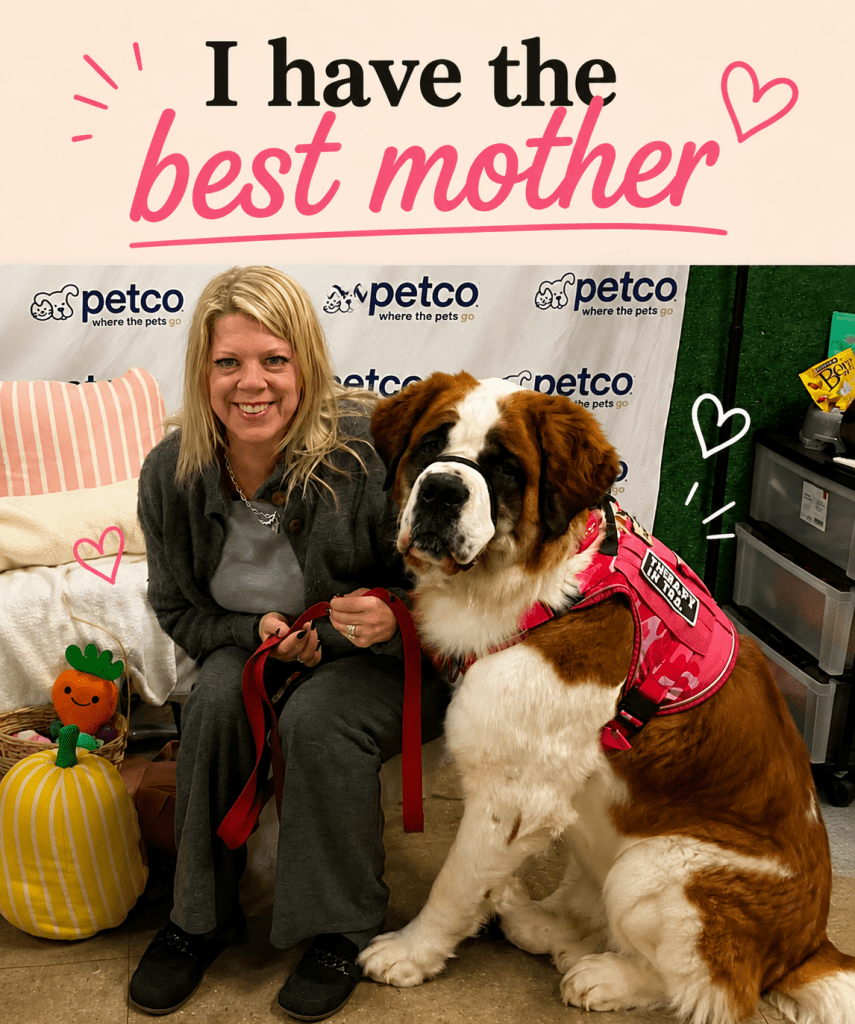
  • After taking a little break from therapy dog training, Esther is officially back at it again.

    We decided to step back for a few months and just let Esther enjoy being a dog, relaxing, playing, going on adventures, and simply being our beloved pet. Now we’re feeling refreshed and ready to continue working toward the therapy dog evaluation again.

    Esther also turned 2 years old on May 12th 🎉 She’s growing up so fast, and we’re excited to continue this journey together.

    Along the way, Esther will also be taking her AKC Urban Canine Good Citizen test to earn another credential on her journey. One step at a time, at Esther’s pace.

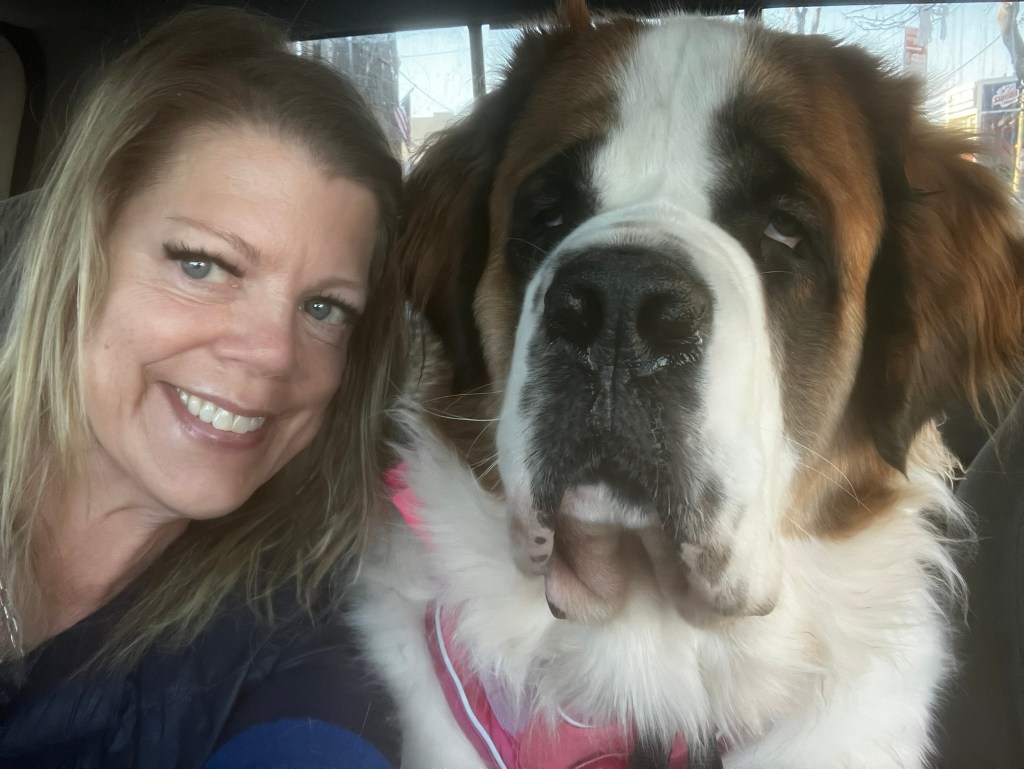
  • Esther and I are on one of our many little adventures together.
    A Small Reflection from Esther and Me

    Those of you who follow this blog know that much of the story of Healing with Anna & Esther began with my Saint Bernard, Esther. Over the past year, I have shared pieces of our journey as we explored the possibility of working together as a therapy dog team.

    Recently, Esther and I attended an evaluation that did not go as planned. Moments like that can feel disappointing at first, especially when you have invested time, training, and hope into something.

    After some reflection, I realized something important.

    The purpose of this journey was never simply about passing an evaluation.

    It has always been about the bond between Esther and me, and the quiet comfort animals can bring into our lives.

    Esther remains exactly who she has always been—my calm companion, a steady presence, and a reminder of the healing power of simply being there.

    Through Healing with Anna & Esther, I will continue to share reflections on grief, compassion, and the human–animal bond. Esther will still be right beside me, doing what she does best: offering warmth, patience, and unconditional love.

    As someone who studies grief and the human experience of loss, I am often reminded that life rarely unfolds exactly as we expect, yet meaning can still emerge from the moments that challenge us.

    Sometimes the most meaningful lessons come from the unexpected turns in the journey.


    AnneMarie Spreckels, MA
    Community Health & Thanatology
    End-of-Life Doula | MSW Candidate

  • Esther’s original therapy dog evaluation, scheduled for January 25, 2026, was unfortunately canceled due to Snowstorm Fern, which made travel and testing unsafe for everyone involved. While disappointing in the moment, safety always comes first—for handlers, evaluators, and especially our dogs.

    I’m happy to share that Esther’s evaluation has been officially rescheduled for March 15, 2026.

    This extra time has become a gift. Esther continues to mature, practice calm greetings, reinforce her cues, and build confidence in new environments. As anyone training a therapy dog knows, this process isn’t just about passing an evaluation; it’s about readiness, reliability, and relationship.

    As her handler, I’ve been reminded that therapy work asks us to model patience and adaptability. Those qualities are just as important as sit, stay, and leave it.

    We’re continuing to train with intention and heart, and I’m deeply grateful for the support, encouragement, and understanding from the Pet Partners community and everyone following Esther’s journey.

    Thank you for cheering us on. We’ll see you on March 15th ; hopefully with clear skies and wagging tails.

    Stay tuned for updates as we get closer to evaluation day…

    🐾Anna & Esther

  • Therapy dog training teaches many lessons, not just for the dog, but for the handler, too. One of the most important is learning when to pause.

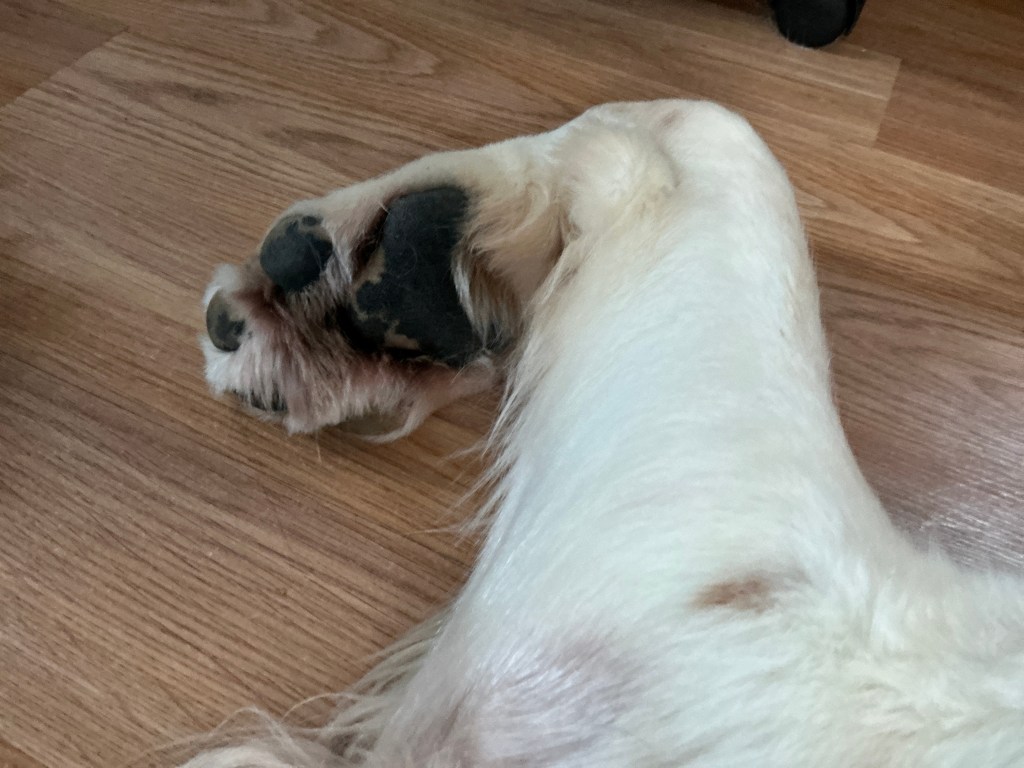
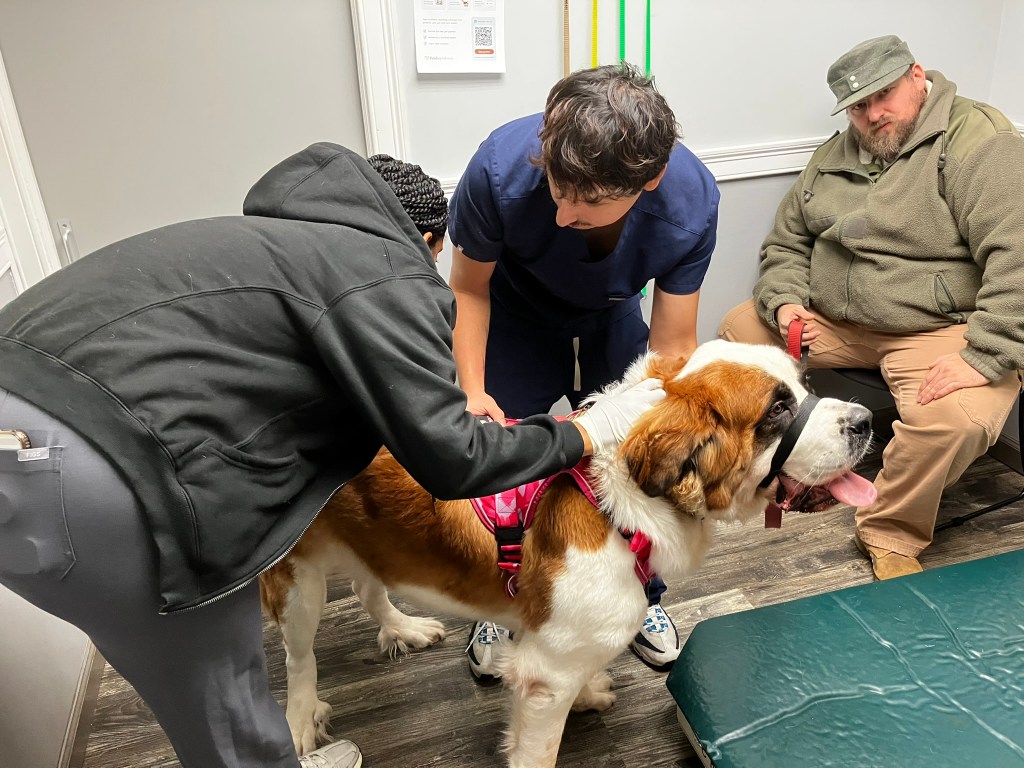
    Recently, Esther had to take a short break from her training after developing a small infection on one of her paw pads. While it’s minor and already being treated, it was enough to remind us that health always comes before progress.

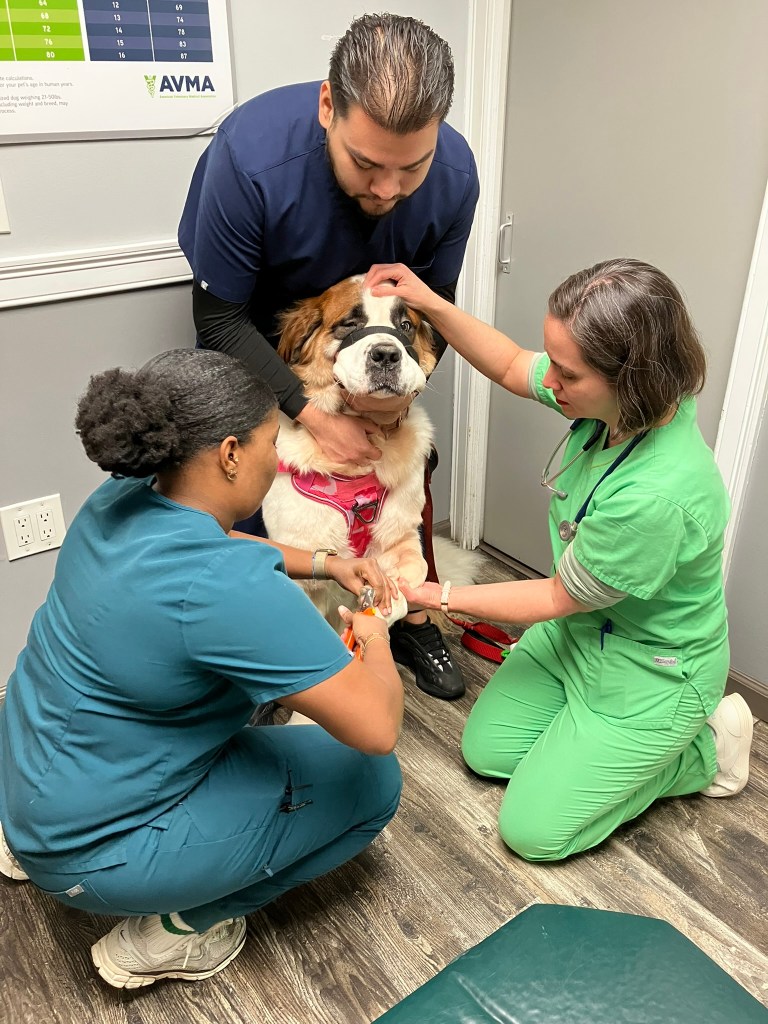
    During her veterinary visit, Esther was calm, supported, and surrounded by care.
    A Small Paw, A Big Responsibility
    A closer look at the paw pad that needed time to heal—minor issues still deserve complete care.

    For a working dog—especially a giant breed like Esther—paw pads are essential. They support her weight, help her navigate different surfaces, and enable her to participate safely in training and therapy sessions. Even a minor irritation can quickly become painful if not addressed.

    During her veterinary visit, Esther was calm, cooperative, and her usual gentle self while her paw was examined and treated. The recommendation was clear: rest, treatment, and time to heal before returning to training activities.

    Why Time Off Is Part of Ethical Therapy Dog Work

    In therapy dog work, stepping back is not failure; it’s a responsibility.

    Pet Partners emphasizes that a therapy animal’s physical and emotional well-being must always come first. As Esther’s handler and mom, it’s my job to notice subtle changes and advocate for her comfort, even when she would happily keep going.

    Taking this pause allows:

    • Proper healing of her paw pad
    • Prevention of further irritation or injury
    • Positive associations with training and handling
    • Long-term sustainability for her future therapy work

    Healing Before Helping

    Esther will return to training only when:

    • Her paw pad is fully healed
    • She is cleared by her veterinarian
    • She is comfortable, confident, and pain-free

    Until then, we’re focusing on rest, gentle care, medicated foot soaks, and lots of quiet bonding time at home.

    A Gentle Reminder for Handlers and Caregivers

    Whether working with animals or people, the lesson is the same: healing doesn’t happen on a schedule. Sometimes the most loving and professional decision is to slow down.

    Esther’s journey isn’t ending; it’s simply pausing for another week so she can come back healthy, strong, and ready to do the work she loves. 🐾

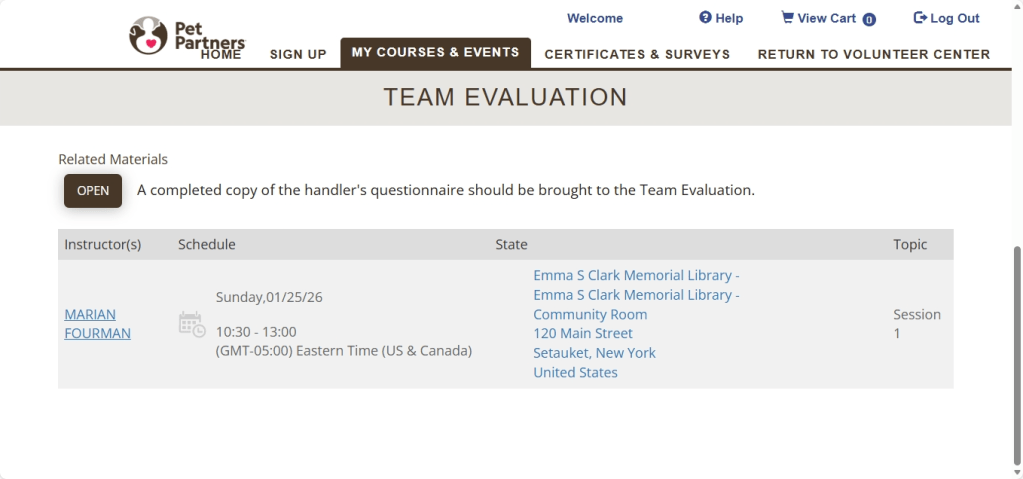
  • Today feels like such a milestone in this journey Esther and I have been on together. After months of training, practicing skills, building confidence, and learning how to work as a therapeutic team, we now have our official Pet Partners Team Evaluation date:
    Sunday, January 25, 2026, at the Emma S. Clark Memorial Library in Setauket, NY.

    Our official Team Evaluation session — January 25, 2026!

    I can’t even describe how proud I am of Esther. From the moment she came home with me at just eight weeks old, she has shown this gentle, intuitive spirit that makes her perfect for therapy work. Every step of this process, from mastering “Leave It “to practicing “Head Down” to calmly navigating busy environments, has been preparing her for this moment.

    Preparing for the Big Day

    Between now and January, Esther and I will continue polishing her skills, making sure she’s confident with all the required elements:
    ✔ Calm greetings
    ✔ Loose-leash walking
    ✔ Reactions to equipment
    ✔ Reactions to other dogs
    ✔ Accepting touch from unfamiliar people
    ✔ Remaining composed in unpredictable situations

    And, of course, I’ll be working on my handler responsibilities too. The evaluation is a team effort, and I want to show up as centered and confident as Esther is.

    Why This Matters

    This isn’t just about passing a test. It’s about the calling I feel as a thanatology and community health student, someone who has personally walked alongside grief, and someone who believes deeply in the healing presence of animals. Esther will not just be a therapy dog, she’ll be a partner in helping people feel seen, comforted, and less alone.

    A Loving Reminder

    Pet therapy doesn’t just happen; it’s built. It’s trained. It’s nurtured. And it requires a dog with a heart big enough to love everyone she meets.

    Esther has that heart.

    We’re ready. We’re grateful. And we can’t wait for this next chapter.

    🐾 Stay tuned—we’ll be sharing updates as evaluation day gets closer!

  • Today was a significant milestone in Esther’s therapy-dog journey: she visited her veterinarian, Dr. Tracy, at Howard Beach Animal Clinic for her official Pet Partners medical clearance, and she passed with flying colors!

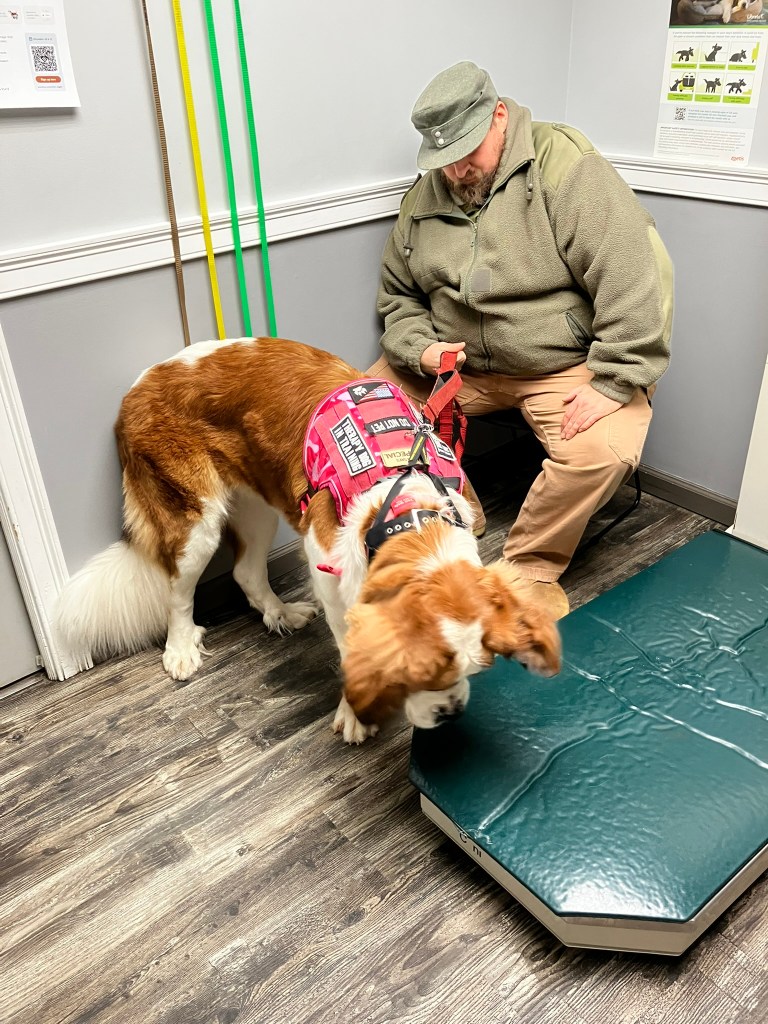
    Esther checking out the scale—always curious and ready to cooperate during her exam.

    As a giant-breed therapy-dog-in-training, Esther’s health and physical well-being are essential for the comfort and safety of the people she will eventually serve. Dr. Tracy completed her full exam, checked all her vitals, reviewed her vaccination records, and made sure she is in excellent condition to continue with the next steps of the Pet Partners process.

    Esther handled the visit like a pro: patient, calm, and full of her usual gentle energy. She even soaked up all the attention from the veterinary team. With her paperwork now officially completed and approved, Esther is one step closer to her evaluation as a therapy dog and to her future work in hospice, hospitals, and community care.

    Watching her stand so confidently during her exam was a reminder of why we started this journey. Therapy work takes time, commitment, and teamwork, but Esther shows me every day that she was born for this role. Our goal is to provide comfort, support, and companionship to individuals and families facing illness, loss, and grief, and moments like today bring us closer to that calling.

    Esther is standing patiently as Dr. Tracy and the vet tech complete her medical clearance. She is such a gentle giant.

    Esther will continue her training as we prepare for her evaluation, and I couldn’t be prouder of my girl. 🐾❤️

  • Healing with Anna & Esther

    Some moments settle into your heart so clearly that you can look back and remember every detail; the feeling in the room, the warmth in your chest, even the quiet sound of a puppy breathing against your ear. One of those moments happened for me in June 2024, the day I met the Saint Bernard who would change my life.

    I thought I was simply going to look at the girl puppies.
    But the truth is, one girl puppy was already looking for me.

    🐶 “Just Looking” … Until I Saw Her

    When my husband brought me to meet the litter, I immediately asked to see the female puppies. The breeder brought them over, and that’s when I noticed her; the largest female in the group, soft and steady, with a calm presence that made her stand out instantly.

    While her sisters playfully tumbled around, she didn’t rush.
    She simply looked at me with those dark, thoughtful eyes.

    And I felt something shift.

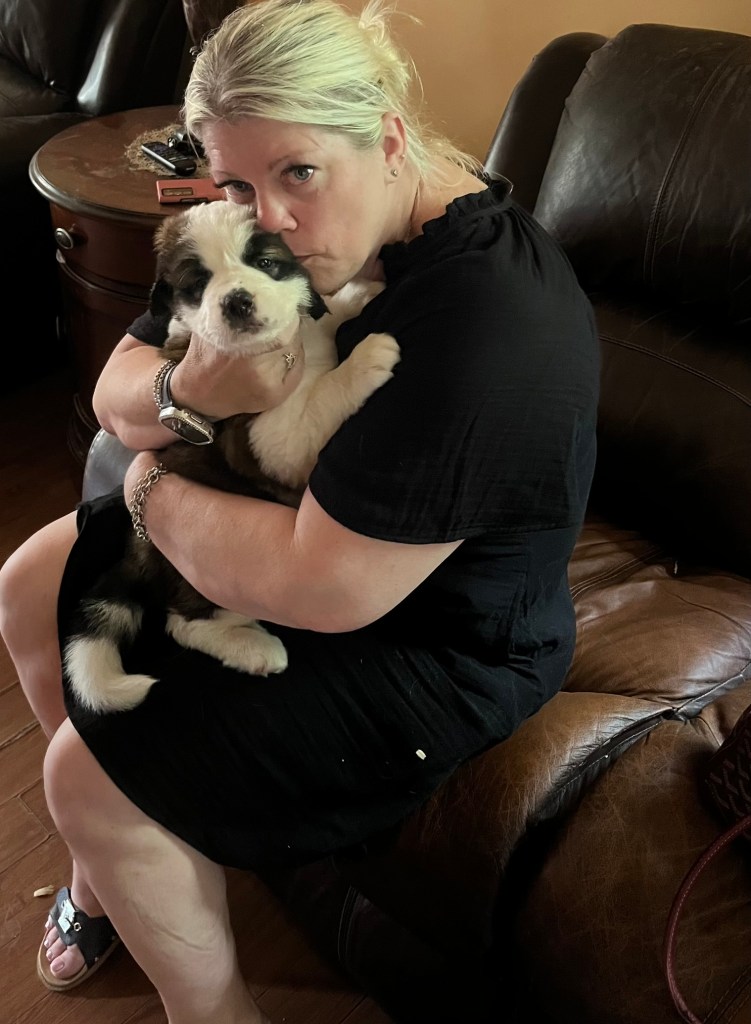
    June 2024 — the moment Esther picked me. At six weeks old, she curled into my arms and made the tiniest noise in my ear. I knew right then I was her mom.
    💗 The Sound That Sealed It

    I decided to pick her up, wanting to feel her close. As soon as she settled into my arms, she leaned in and made the softest little noise, half sigh, half puppy grumble, right in my ear.

    It was such a tender, trusting sound that it melted something inside me.

    Right then, without hesitation, I turned to the breeder and said:
    “I want her. I want Esther.”

    The breeder smiled gently and told me something I wasn’t ready for:
    Because she was only six weeks old, I’d have to wait two more weeks before she could come home. She still needed to stay with her biological mother until she was fully weaned.

    Two weeks felt like forever.
    But I waited, preparing the house for her. I waited every single day until the moment I could finally bring her home.

    🏡 The Ride Home: A New Beginning

    When the day finally came to pick her up, everything felt surreal. I remember placing her in the car, watching her tiny body settle against the seat, knowing our life together was truly beginning.

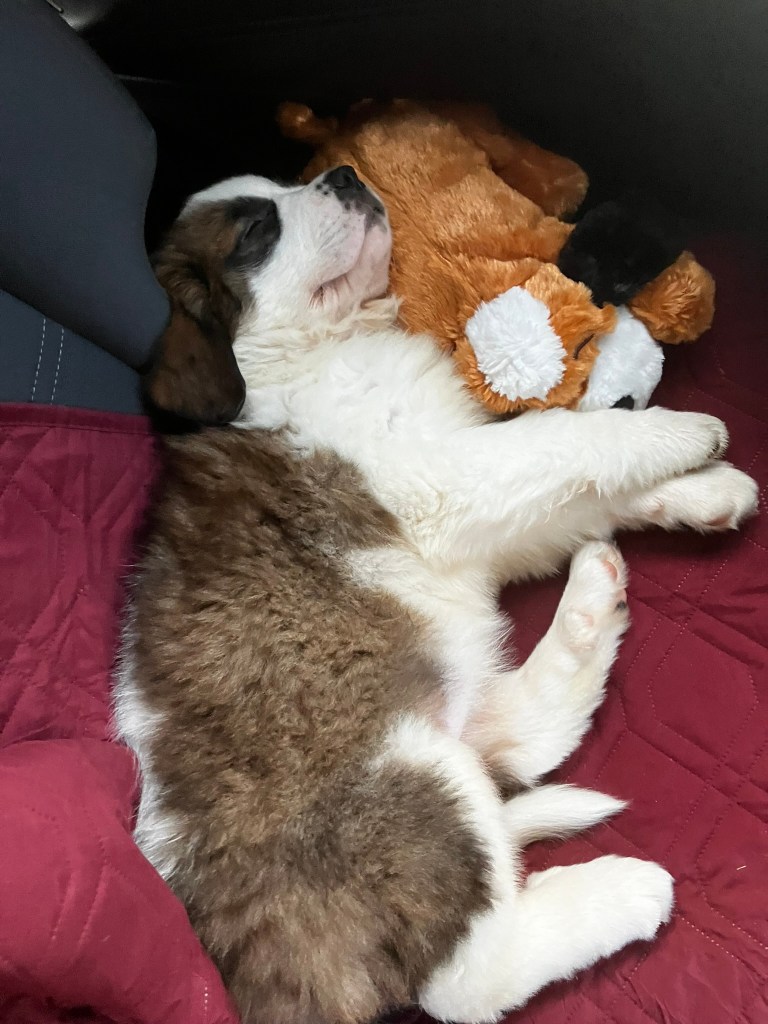
    Heading home for the very first time, Esther’s first car ride at eight weeks old
    She snuggled her stuffed pup the whole way home, already showing that gentle, comforting spirit she still carries today.
    Completely at peace. Esther slept most of the ride home, trusting that she was safe and loved
    🐾 Home at Last

    Bringing her inside for the first time felt like stepping into a new chapter; one I didn’t even know I’d been waiting for. She explored, sniffed, wiggled, and then curled right into me as if she had already memorized my heartbeat.

    Home together; the beginning of our life-long bond and the first day of our journey as a team.
    A Bond with Purpose That Was Always There

    What I didn’t know that day—but see so clearly now—is that the tiny, calm, six-week-old puppy I chose would one day grow into a 165-pound Saint Bernard with a heart big enough to comfort others.

    I didn’t know she would begin training to become a therapy dog.
    I didn’t know our calling would lead us to work hard to learn to sit beside people in hospice, support grieving children, or want her to be a part of my work as a thanatology professional.

    But her gentleness was there from the very beginning; before the training, before the certificates, before the future we are now building together.

    That moment in June 2024 wasn’t just the start of a relationship.
    It was the beginning of a calling shared between a woman and a Saint Bernard, who chose each other long before they understood why.

  • I’m thrilled to share a significant milestone on this journey with Esther:

    I have officially completed the Pet Partners Handler Training!

    This course has given me the knowledge, confidence, and foundation to partner safely and compassionately with Esther, my beloved Saint Bernard, during future therapy visits.

    As I complete my master’s degree in Thanatology/Community Health this semester, this certification aligns beautifully with the supportive work I hope to do in the near future. After I finish this degree, I will be continuing my education and beginning my MSW, with long-term goals of offering grief and bereavement therapy to families and individuals. My hope is to integrate pet therapy services into that work, bringing together my professional training, my lived experiences, and Esther’s gentle, comforting presence.

    My Official Certificate
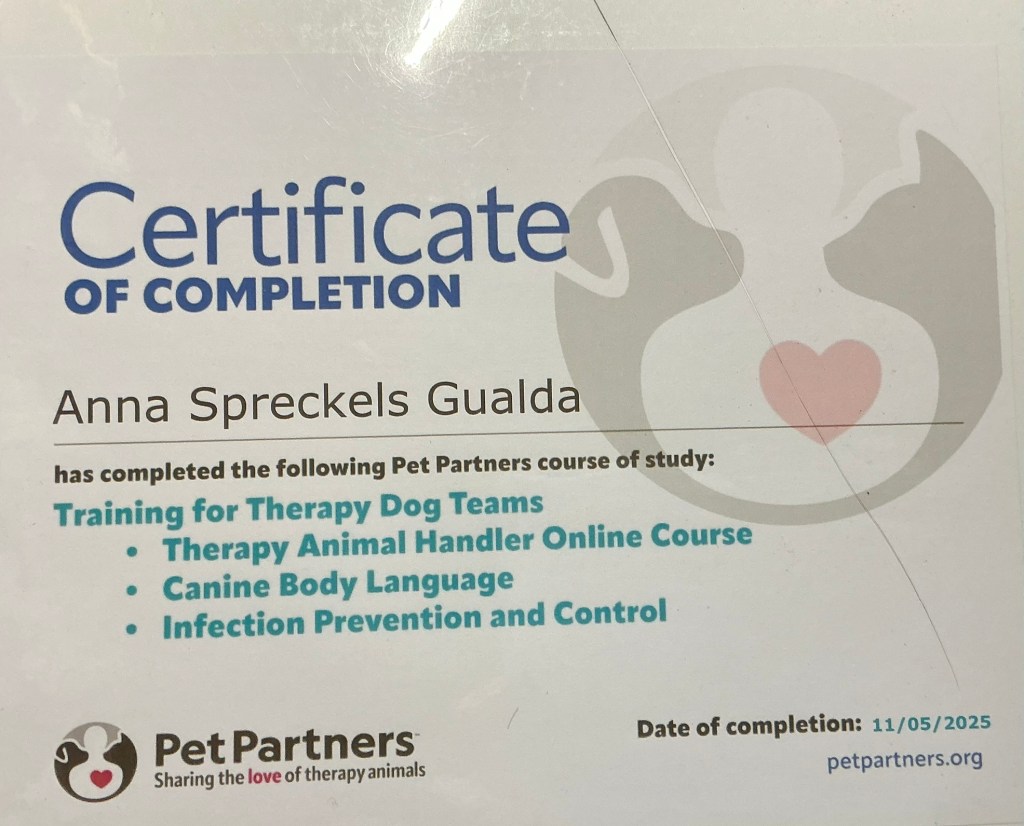
    Proud to share my official Pet Partners Handler Training certificate. One step closer to becoming a registered therapy dog team with Esther!
    What the Training Covered

    This certificate reflects completion of the full Pet Partners coursework:

    • Training for Therapy Dog Teams
    • Therapy Animal Handler Online Course
    • Canine Body Language
    • Infection Prevention and Control

    Each section strengthened my understanding of handler responsibilities, from infection control to recognizing subtle signs of stress in dogs to navigating sensitive environments with professionalism and care.

    Why This Matters for Our Future Visits

    Therapy animal visits can offer grounding, comfort, and connection for people navigating illness, isolation, grief, or emotional stress. This training emphasized how to:

    • Support clients with respect and sensitivity
    • Advocate for Esther’s wellbeing and comfort
    • Follow facility protocols and infection control guidelines
    • Work collaboratively with staff
    • Create safe, calm, meaningful interactions

    These principles strongly complement the work I plan to do along my academic and professional path in thanatology and social work.

    Next Step: Esther’s Medical Evaluation 🩺

    Now that I’ve completed the handler portion, Esther will undergo her veterinary health screening. Pet Partners requires therapy animals to be:

    • Healthy and up-to-date on vaccinations
    • Emotionally steady
    • Behaviorally appropriate in various environments

    She has also been practicing important skills like:

    • “Leave It”
    • “Visit”
    • “Head Down”
    • Remaining calm around wheelchairs, walkers, and medical equipment

    Esther will continue her professional training all the way up to evaluation day to make sure she feels confident, safe, and ready for her future as a therapy dog.

    I’m so proud of how far my giant fur daughter has come.

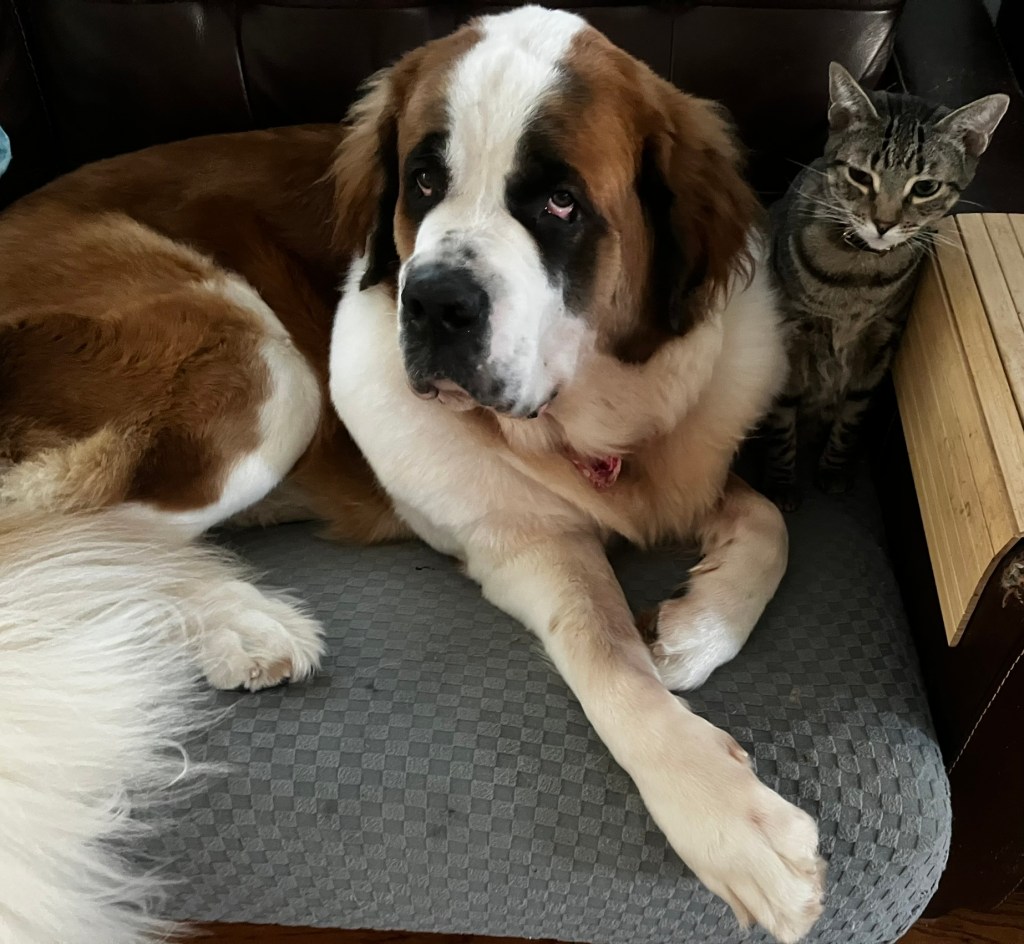
    Esther’s cat brother is proud of her, too!
    Moving Forward

    Completing the Pet Partners Handler Training is one more step toward the future I’m building; a future where I can combine my academic training, my commitment to grief and bereavement support, and the healing presence that Esther brings.

    Healing with Anna and Esther continues to grow with every milestone. I look forward to sharing more updates as we prepare for Esther’s medical evaluation and progress toward becoming a registered therapy team.

    Thank you for walking this journey with Esther and me🐾

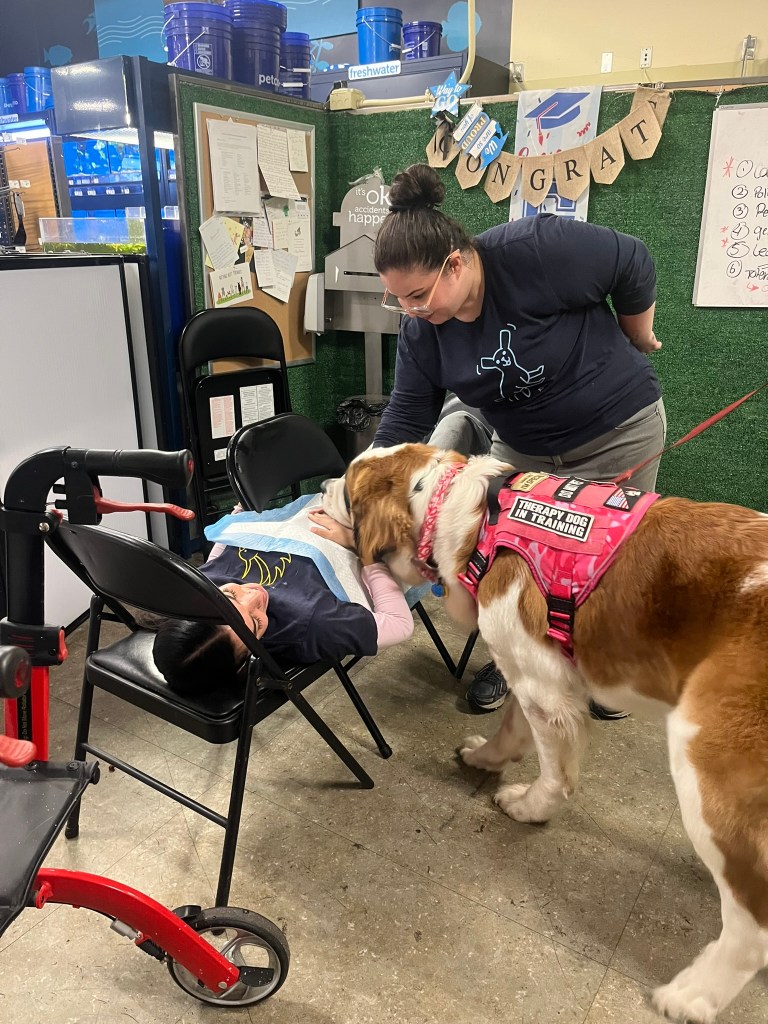
  • Training Esther for therapy work has opened my eyes to how even the smallest skills can bring comfort to someone who truly needs it. One of the most meaningful cues Esther’s trainers and I are working on right now is “head down,” a gentle position where Esther rests her head close enough for someone to pet her without needing to sit up, reach, or strain.

    For clients who cannot get out of bed or who have minimal mobility, this skill is not just helpful; it’s essential. And because safety and infection control always come first, Esther and I practice this with protective barriers, just as we will use them in real healthcare, hospice, and long-term care settings.

    Bringing Comfort Within Reach

    Many people we will meet during therapy visits may be:

    • Bed-bound
    • Recovering from surgery
    • Attached to medical equipment
    • Experiencing pain, weakness, or fatigue
    • At the end of life

    For them, even reaching out can be exhausting. By teaching Esther to gently move her head closer to the client, she becomes accessible to everyone, not just those who can sit up or lean forward.

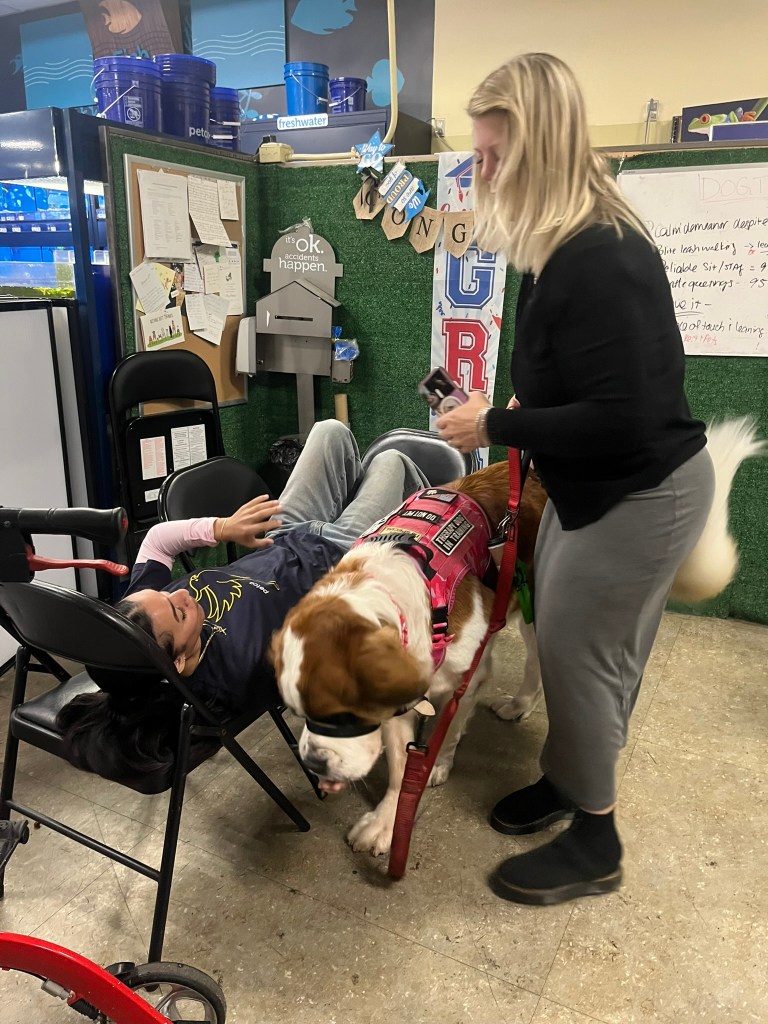
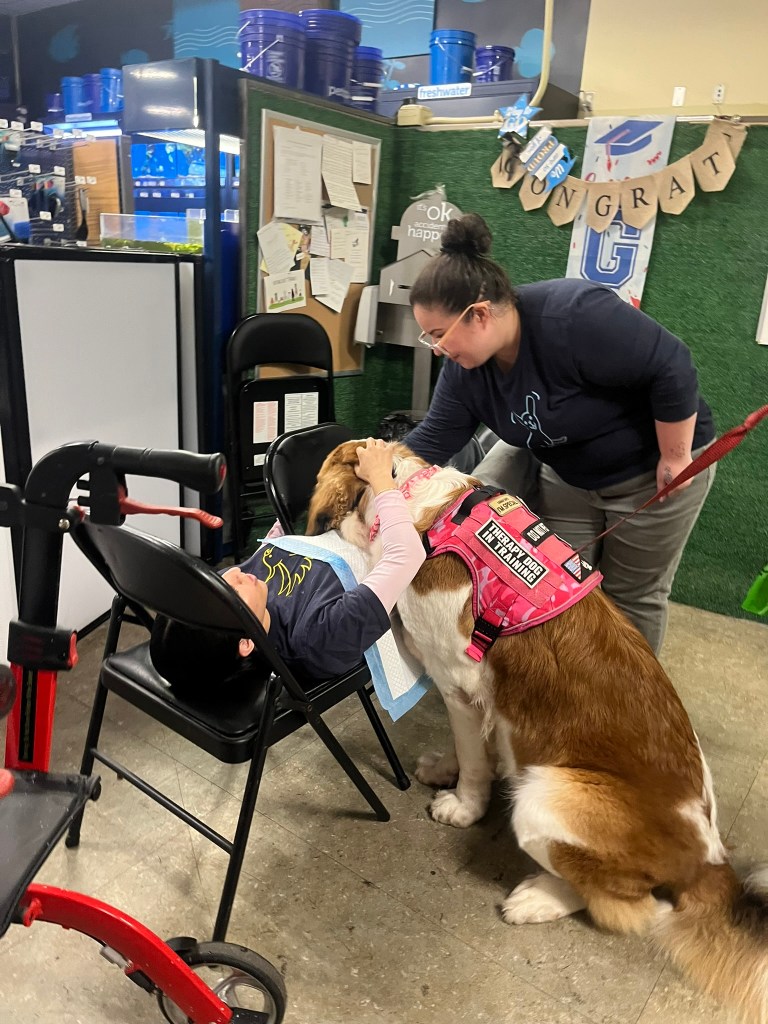
    Practice Session: Esther Learns to Approach a Reclined Client
    Practicing a real-life scenario: Esther learns to approach slowly and safely when someone is reclined and unable to reach.
    Supporting Safety with Protective Barriers

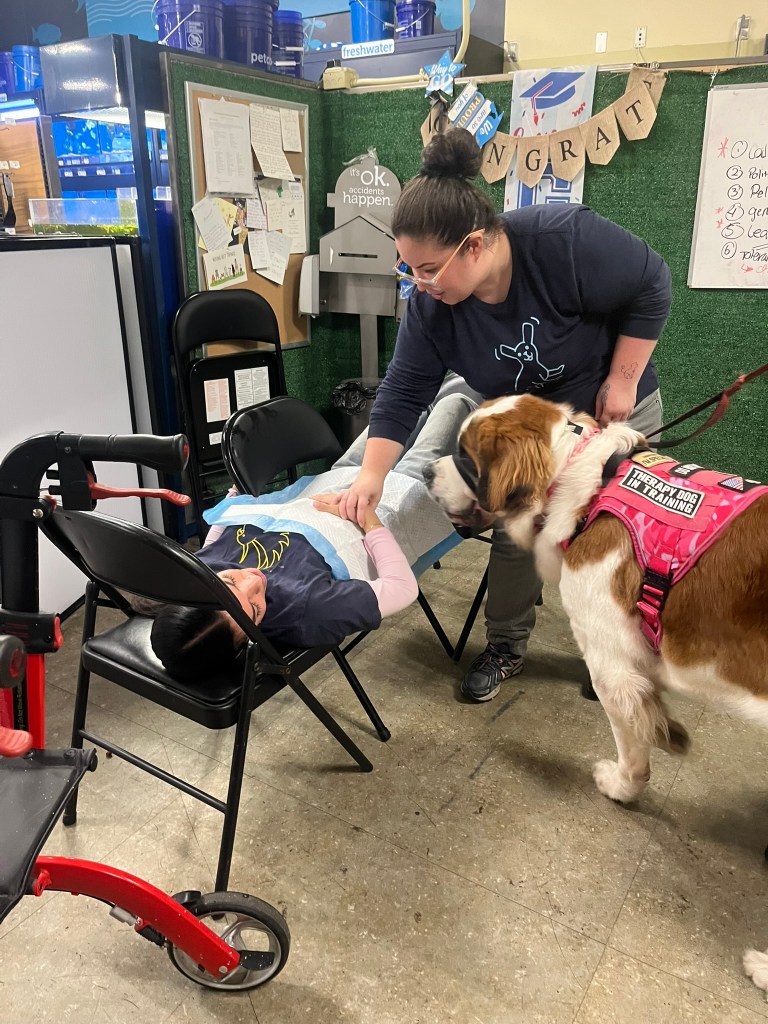
    In real facilities, we will always follow infection-control guidelines. This includes using clean, single-use barriers between Esther and any bedding or clothing. Even when only her head is resting near a client, we practice with barriers so that the habit becomes second nature.

    Using a clean barrier helps protect both the client and Esther, an essential part of therapy-dog infection control.
    Building Trust, Calm, and Connection

    The “head down” skill supports more than mobility; it creates space for emotional connection. Some clients may not have the energy to speak, but they can still rest a hand on Esther’s soft fur. That simple connection can provide:

    • Grounding during anxiety
    • Comfort during pain
    • Presence during loneliness
    • Companionship at end of life
    Esther practices lowering her head carefully, just close enough for a gentle touch without overwhelming the client.
    Making Everyone Feel Included in the Visit

    Nothing breaks my heart more than the idea of someone being left out of a therapy visit simply because they can’t move easily. By teaching Esther this skill, it ensures that every person, regardless of mobility level, has the opportunity to feel included, seen, and comforted.

    This training helps us say:

    • “You matter.”
    • “You are not forgotten.”
    • “You deserve comfort too.”
    A beautiful example of why this skill matters: Esther stays calm, steady, and within easy reach.
    Preparing Now for the Clients Who Need Us Most

    Each practice session brings us closer to being ready for real therapy visits in hospice, hospitals, children’s programs, and eldercare. Esther is learning:

    • To approach beds and chairs slowly
    • To stop at a safe and comfortable distance
    • To place her head gently on a designated barrier
    • To hold her position calmly until cued to move

    This is the kind of work that makes therapy-animal visits meaningful, dignified, and accessible.

    We practice with care today so we can serve with compassion tomorrow.